


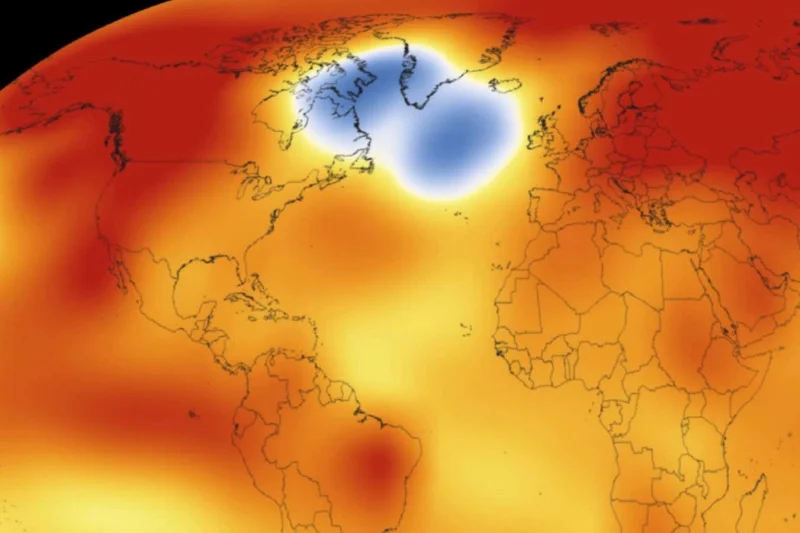
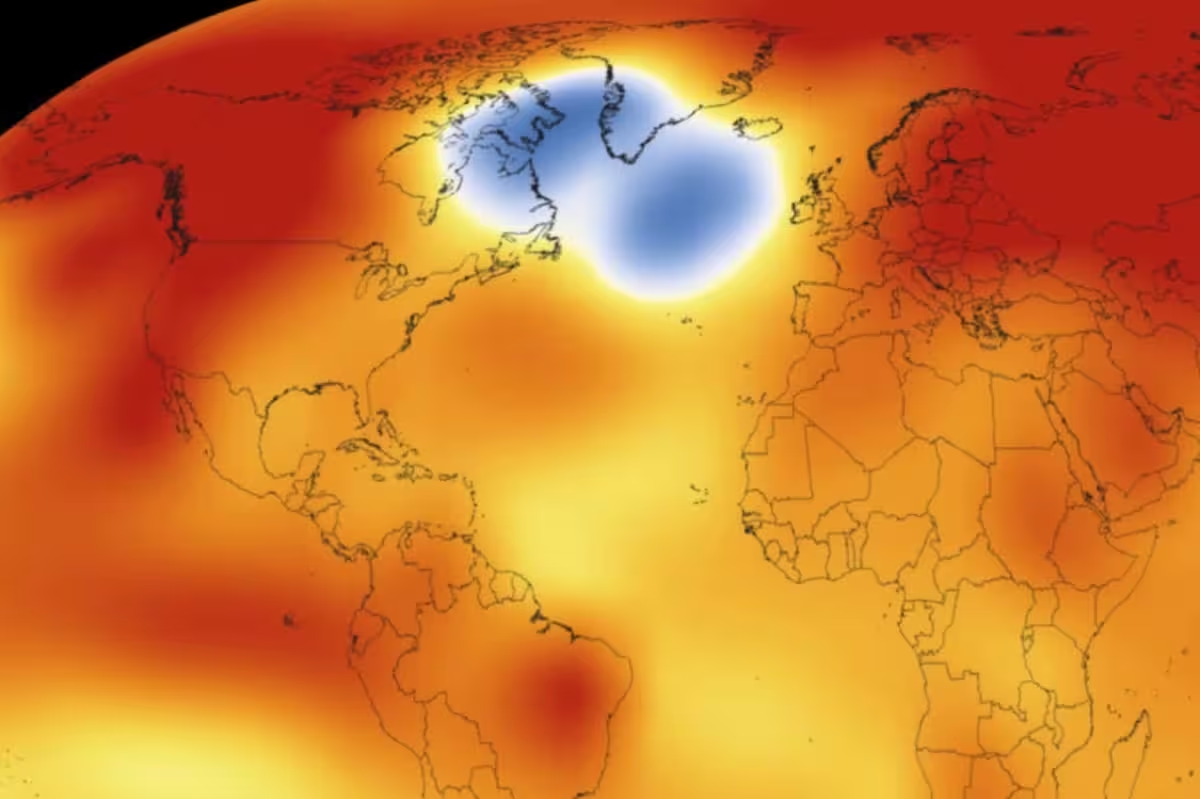
A patch of ocean southeast of Greenland that has cooled by as much as 1C over the past 150 years is looking less like a weather quirk and more like a warning sign. New climate reanalyses back the case that the cold blob, or warming hole, is being driven by a weakening Atlantic Meridional Overturning Circulation, the current that helps move heat from the tropics toward Europe.
The finding matters now because the Atlantic has not been cooling in isolation: it is the one place in a warming world that has steadily stood out on temperature maps, and scientists say the signal now lines up with a circulation change that has been building for decades. Stefan Rahmstorf, who led the new analysis with colleagues, said the data show the ocean is behind the pattern, not the air.
That is a significant shift in the debate around the cold blob. For years, researchers have been split over whether the patch was mainly the fingerprint of a weakening AMOC or the result of atmospheric changes. Rahmstorf and his team say the latest evidence favors the ocean. They found that heat loss from the ocean surface has decreased in the cold blob area since 1955, and that the cooling reaches about 1,000 metres below the surface as well as near the top of the water column.
Rahmstorf said winds and clouds “only explain a modest fraction of the warming hole.” He added that even where models make it seem possible that the atmosphere is to blame, “the data show it is caused by the ocean.” The researchers argue that this is the more important explanation because the AMOC carries warm, salty water from the Gulf of Mexico toward the north Atlantic, and that flow is central to Europe’s milder climate.
Scientists worry that freshwater from Greenland’s melting ice is making the salty water less dense, so it sinks more slowly and weakens the overturning circulation. There are only 22 years of direct observations of AMOC strength, so the record is too short to settle every detail. But the reanalysis evidence, combined with the long-term cooling in the cold blob region, points to a circulation that has been changing for longer than the instrument record can easily show.
That broader concern is why the new interpretation lands with so much force. Some research suggests the AMOC could cross a tipping point within decades, and a future collapse could freeze Europe and disrupt monsoon rains that farmers in Africa and Asia depend on. The finding also raises the prospect of trouble for the subpolar gyre around the cold blob itself, not just the larger Atlantic conveyor.
The main unresolved question is not whether the patch is real, but how far the system has already moved toward a break point. The cold blob has been cited in climate work for years, including a 2022 study by Chengfei He and colleagues that linked rapid Arctic warming to a weaker pole-to-tropics temperature contrast and a northward shift of the jet stream into the same region. Rahmstorf’s group now says the colder water extends deeper and reflects a sustained ocean-driven change. What remains unknown is whether the AMOC keeps weakening slowly or crosses a threshold that the Atlantic cannot easily reverse.
