


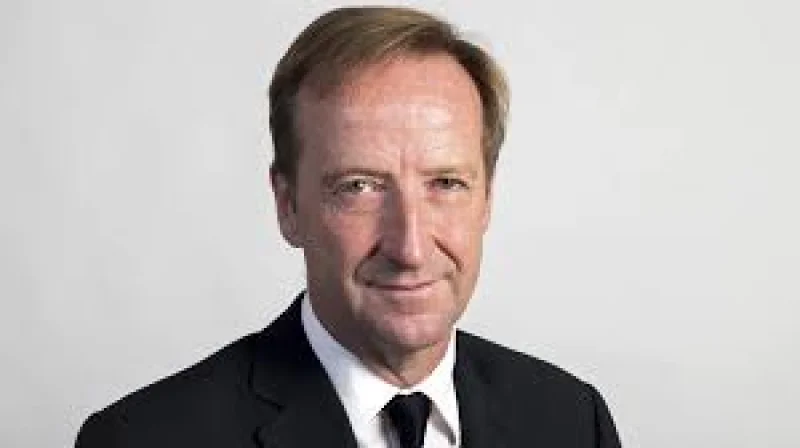
Sir Alex Younger, the former head of MI6, has died at the age of 62 after being treated for cancer. The announcement on Wednesday brought tributes from across British politics and intelligence, with ministers and colleagues paying immediate respect to one of the country’s most prominent spies.
Keir Starmer said he was saddened by the news and described Younger’s life and career as exemplary. The prime minister noted that he served as chief of the Secret Intelligence Service, as MI6 is formally known, from 2014 to 2020. Yvette Cooper said the country owed him an enormous debt of gratitude, while Blaise Metreweli, the current chief of the service, said Younger had fought cancer for some time and embodied its values of integrity, courage, creativity and respect.
For many outside Whitehall, Younger became the public face of an agency that usually works in shadows. He was the longest-serving MI6 chief in 50 years and the 16th chief since the service was founded in 1909, which made his tenure unusual even by the standards of a secret organisation. His career had begun long before he reached the top job: commissioned into the Royal Scots in 1986, he later transferred to the Scots Guards and was promoted to captain the following year before joining MI6 in 1991.

He went on to work operational intelligence duties in Europe and the Middle East, served as MI6 station chief in Afghanistan during the US-led coalition against the Taliban in 2001, and later led the service’s counter-terrorism work in the three years running up to the London Olympic Games in 2012. Those years built the reputation that followed him into the top post, where he was known simply as C.
The tributes also exposed the odd way his death reached the public. Alex Burghart paid tribute to him in the House of Commons, saying Younger had passed away suddenly during the course of the debate. Nick Robinson, who said he became friends with Younger after his first appearance on the Today programme, wrote that he had long feared the news and that Younger had died after months trying to cheat the prognosis he was given. The two accounts leave the same picture from different angles: a private illness that had been fought for months, then a death that arrived with little warning for the people hearing it in public.
What remains unanswered is the detail behind the illness itself. The service has said Younger died after fighting cancer for some time, but has not identified the type. What is clear is that MI6 has lost a chief who shaped the agency at a difficult time, and Britain’s security world has lost a figure whose career was long enough to span the Cold War’s afterlife, the post-9/11 era and the years when intelligence leaders had to speak more openly than they once did.
