


Strategy sold about $2.5 million worth of Bitcoin on Wednesday, a tiny transaction by its standards but one that landed hard because it cut against Michael Saylor’s long-running promise that the company would never sell.
The sale involved just 32 tokens from Strategy’s 843,706-coin hoard, which was still valued at more than $60 billion. Bitcoin fell as much as 3.1% to $65,391 before recovering part of the drop, and the weekly decline has erased about $160 billion from the cryptocurrency’s market value. Strategy shares were down 14% this week, leaving the stock more than 70% below its peak.
That is why the move is being watched so closely today. Investors have already been pulling money from the market: nearly $4 billion has left US-listed Bitcoin exchange-traded funds over the past 12 sessions, while about $1.5 billion in bullish crypto perpetual futures positions was wiped out over the past 24 hours. At the same time, the Nasdaq 100 climbed to a fresh record on Tuesday, underscoring how far Bitcoin has been lagging risk assets that are drawing new money instead.
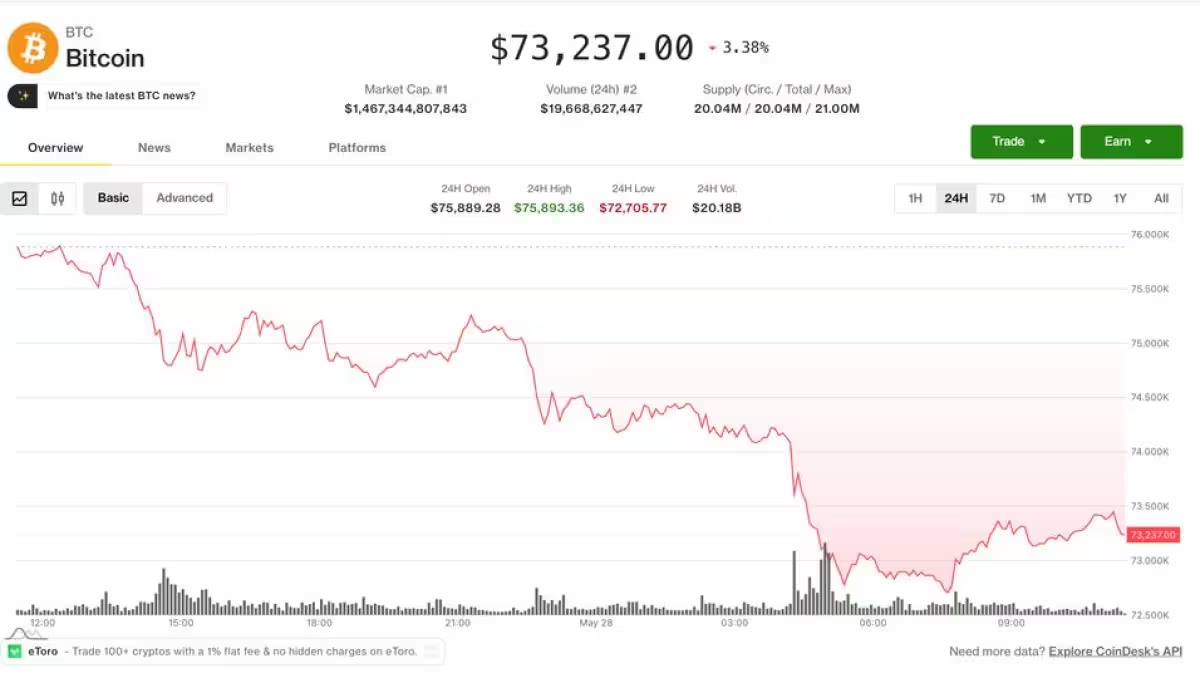
The contrast is becoming sharper by the day. Bitcoin is down 37% over the past 12 months and remains 48% below last year’s peak, even as the Nasdaq 100 is up 42% over the same period. Carney Mak said some capital has been rotating from Bitcoin and digital assets into AI equities because the risk-reward profile currently looks more compelling, and that shift has shown up in corporate behavior too. K Wave Media abandoned plans to deploy roughly $500 million into Bitcoin and redirected most of the capital toward AI data centers, GPU infrastructure and related acquisitions, while Bitdeer liquidated its entire Bitcoin treasury to fund expansion into AI and high-performance computing.
The sale itself was financially small, but it was psychologically loud. Strategy has spent years presenting itself as the most committed corporate holder of Bitcoin, and even a 32-token sale invites questions about whether that stance is softening at the worst possible moment. Funds tied to the company, including MSTU, MSTY and MSTX, could see amplified swings if investors start to doubt the durability of the accumulation strategy, which is why the market is treating a $2.5 million trade like a much bigger signal.
What comes next is whether Strategy keeps selling or returns to its familiar pattern of accumulation. Until that is answered, the company’s Bitcoin position will remain the market’s most closely watched balance sheet story, and the tiny sale will hang over every move in Mstr stock.
