


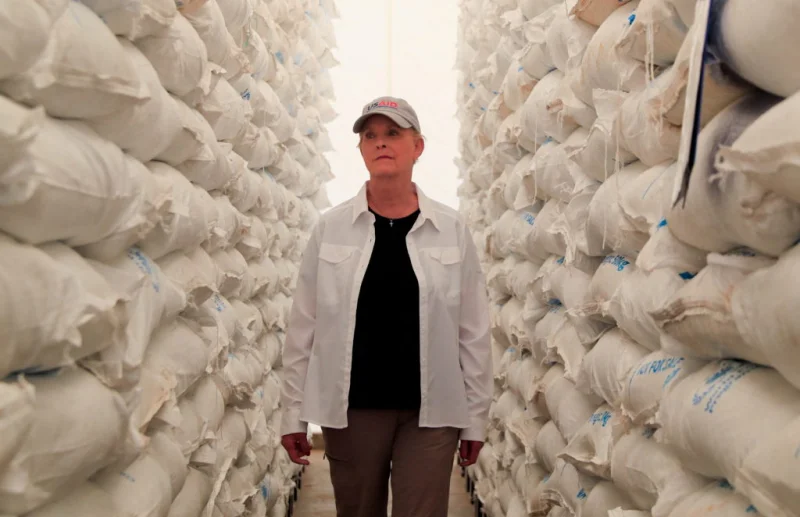
The World Food Programme has received only half the money it needs in 2026 to reach the people it is trying to feed, Cindy McCain said, warning that the gap is already limiting the agency’s response to hunger and disease crises. McCain, the executive director of the United Nations agency, said the shortfall comes as the WFP is trying to keep up with people facing urgent food insecurity.
McCain’s remarks on a taped interview aired as the WFP was still confronting a year of shrinking support. She said the funding squeeze reflects both U.S. cuts and a broader global pullback, with some governments looking inward as their voters push for more spending at home and less on foreign aid. The transcript of the interview was updated on May 31, 2026 at 8:32 AM EDT, two days after it was recorded.
She said the WFP has already seen two famines and is now watching several more. That makes the money gap more than an accounting problem. It is a test of whether the agency can keep delivering food at a scale that matches the crisis it is facing.

McCain also pointed to a shift that has not been enough to close the hole. She said there has been more involvement from the private sector and corporations, but added that the WFP still needs countries, businesses and corporations to step up. Even with that support, she said the agency has only half the money it needs to feed the people it is looking at right now.
The shortage matters far beyond headquarters. McCain said the WFP is a large part of the emergency response to Ebola in the Congo, where she said about 27 million people are food insecure. The agency brings in supplies, brings in people and runs logistics in the region, work that becomes harder when funding is tight and the outbreak is deadly.
What remains unresolved is how quickly the missing money will arrive. McCain did not name a new pledge, and without fresh funding the WFP will keep trying to stretch its response across hunger hotspots and an Ebola emergency with only half the resources it says it needs.
