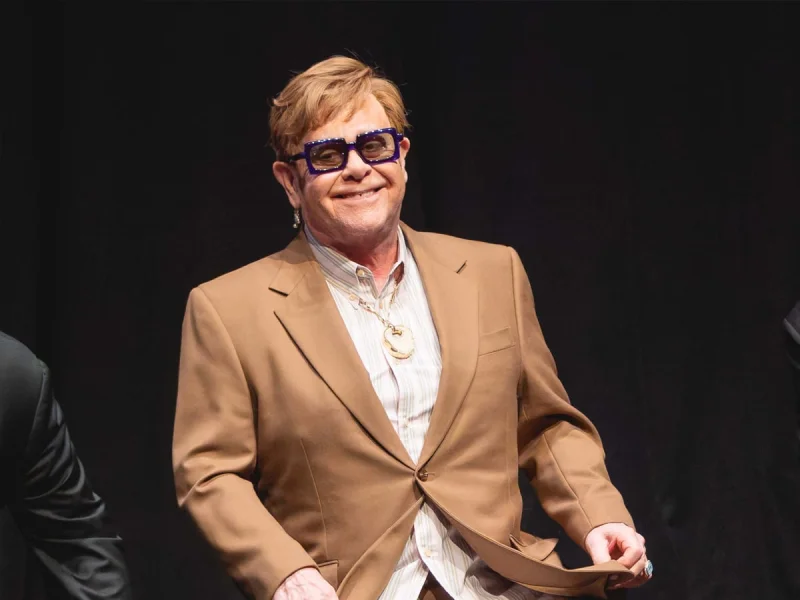
Elton John was close enough to joining Jeff Beck’s band for an American tour that he says he was ready to ask where to sign. Instead, publisher Dick James shut it down, telling Beck’s agent to stuff the 10 per cent and insisting John would go on to earn twice what Jeff Beck does.
That near-miss matters now because it shows how easily John could have taken a different road before his solo fame arrived. He was still looking at himself first as a songwriter, still weighing whether to quit the day job and move on to another group, and still trying to get traction on early records when the Beck offer landed in front of him.
John has described the proposal as Jeff effectively wanting to use him, Dee and Nigel and their backing band for the American tour. He said those would have been big audiences, and that he would have been playing his songs in front of them as part of Beck’s band rather than as a completely unknown artist. For a young performer trying to break through, that was not a small opportunity. It was a chance to put his songs in front of crowds that already knew the name on the ticket.
The case for John’s move was obvious to him. Jeff Beck was no minor lure; he was a consummate rock guitarist, and the records Truth and Beck Ola were already regarded as masterpieces for guitar players. John wanted in. He said he was ready to sign when James stepped in with a different calculation, one based not on the short tour but on the long run. James told the agent that John would earn twice what Beck does, and that was the end of it.
That line stuck. John said it sounded like something that would follow him around the rest of his career, and he could picture himself five years later still slogging around the clubs as The Guy Who Was Going to Earn Twice What Jeff Beck Does. It was a grim image for someone who wanted a break, but it also captured the leverage James believed John had as a solo artist. John’s partner Bernie Taupin fit him perfectly, Three Dog Night had already sung Lady Samantha, and arranger Paul Buckmaster was helping shape some of his finest albums, but none of that had yet turned him into a star.
Then the turn came. Your Song became a hit, and the feared nickname never had the chance to define him. Beck later moved toward instrumental work such as Cause We’ve Ended As Lovers, while John stayed on the solo path that James had chosen for him. The unresolved question is not whether John was tempted — he plainly was. It is how different his early career might have looked if he had signed for the tour instead of waiting for the song that changed everything.