


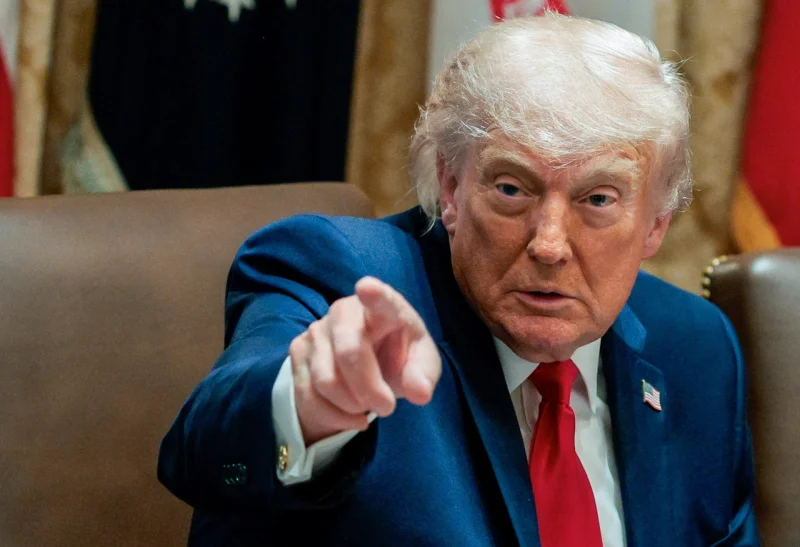
Donald Trump held a meeting with top aides on Friday in the White House Situation Room to make a final determination on a framework for extending the ceasefire with Iran, but it ended without clarity on the next steps. The meeting came after a day of sharp public demands from Trump over Iran’s nuclear programme and shipping in the Strait of Hormuz.
Trump said Iran must agree to never have a nuclear weapon or bomb, that the Strait of Hormuz must reopen for unrestricted shipping traffic in both directions, and that any mines in the waterway must be destroyed. In a social media post earlier on Friday, he said he was prepared to lift the US naval blockade of the strait and that ships caught there could start the process of heading home.
The timing matters because the two countries had agreed a framework on Thursday pending approval by Trump and Iran’s leadership. Under that outline, the ceasefire would be extended for 60 days and talks would begin on the future of Iran’s nuclear programme. A White House official told CBS News that Trump will only make a deal that is good for America and satisfies his red lines.

The friction is that Tehran is not talking the same language. Iran’s foreign ministry spokesman, Esmaeil Baqaei, told state TV that Iran was focused on ending the war and that there are no negotiations on the nuclear issue. The United States has long demanded that Iran stop producing highly enriched uranium and dispose of its existing stockpile, while Iran insists its programme is entirely peaceful and denies trying to build nuclear weapons.
Trump added that Iran must allow the United States to remove and destroy its enriched uranium and said, in his words, “No money will be exchanged, until further notice.” White House officials later confirmed the Situation Room meeting had concluded, leaving the proposed ceasefire framework hanging on decisions from both capitals. Pete Hegseth also floated the possibility of the United States recommencing strikes in Iran, underscoring how quickly the ceasefire could unravel if either side walks away.
For now, the most important question is whether Trump and Iran’s leadership will approve the outline that was drafted on Thursday. If they do not, the ceasefire remains only a pause, and the wider fight over uranium, sanctions and access to one of the world’s most important shipping lanes will resume without a deal in place.
