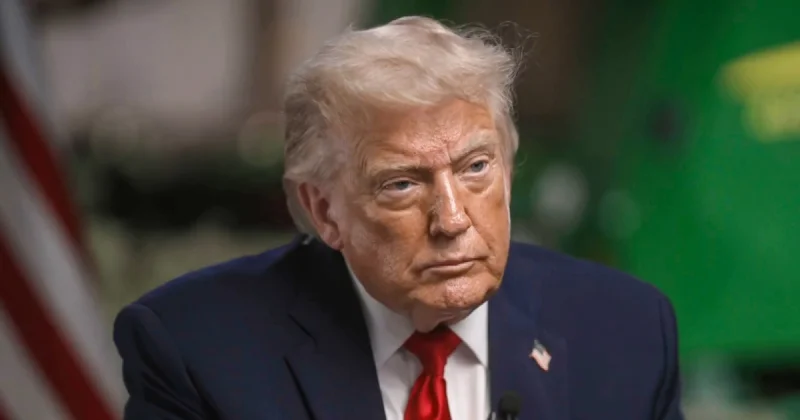
Donald Trump sat down with Kristen Welker on Friday and, by Sunday, the interview had become a fresh test of how far his claims about Iran could stretch before they broke. NBC News said he made a series of false, misleading or exaggerated statements about the war with Iran, U.S. strikes and the damage he said had been done.
The exchange mattered because Welker was not just asking campaign-style questions. She pressed Trump on whether he wished he had negotiated a better deal during his first term, after he promised he would secure one. Trump answered that it was better to negotiate now and said, “Israel wouldn’t have been ready” during his first stint in the Oval Office.
That was the backdrop to a longer argument over Iran’s nuclear program. Trump said he had terminated the 2015 deal negotiated by President Barack Obama, then sent B-2 bombers into Iran about nine or 10 months ago and “obliterated, totally obliterated, the site.” He went further, saying that without the strike Iran would already have a nuclear weapon and that “half of the world” could have been wiped out.

Those claims ran straight into U.S. assessments that have been public since March. Then-Director of National Intelligence Tulsi Gabbard testified that spy agencies believed Iran had not decided whether to build nuclear weapons, and NBC News reported in June that that assessment had not changed. The International Atomic Energy Agency has also said Iran likely still holds nearly 1,000 pounds of uranium enriched to 60%, enough to keep the program dangerous but not enough, by itself, to erase the gap to a weapon.
That gap matters. Experts and former officials have said Iran would need months, and possibly more than a year, to build a nuclear warhead that could fit on the tip of a missile even if it had weapons-grade uranium. Before Trump pulled the United States out of the 2015 deal, Iran had no stockpiles of uranium enriched beyond a low level and was subject to regular United Nations inspections. The difference between those two points is the heart of the dispute Welker was probing.
Trump also cast the current war in sweeping military terms, saying major arms of Iran’s forces were gone. “Their navy is gone. Their air force is gone. Their anti-aircraft is gone,” he said, later adding, “In three months, I’ve demolished the navy, the air force, anti-aircraft. They have no radar. They have nothing.” NBC News said half of Iran’s unconventional navy remains intact after weeks of bombing, and in July it reported that one nuclear enrichment site was mostly destroyed while two others were not as badly damaged.
Welker’s interview put Trump’s Iran policy back under a microscope because it connected his first-term decision to abandon the nuclear deal with his second-term claims about what military force has achieved. The question left hanging is not whether Trump will keep making the case; it is whether the gap between his version of events and the intelligence and inspection records will keep widening the next time he is pressed on it.