


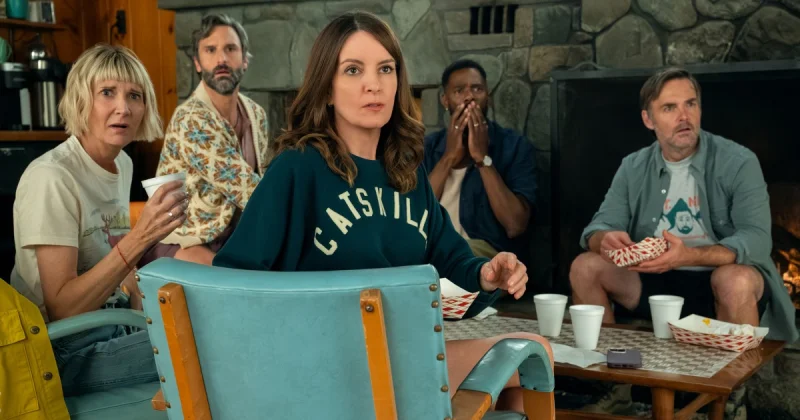
The second season of The Four Seasons has landed with a review that calls the midlife comedy even more fantastic than the first. For viewers who watched Nick die at the end of season one, the new outing keeps the show’s sharp, rueful tone alive while pushing its broken relationships into stranger, funnier shapes.
That matters now because the series has been designed as a seasonal event, and season two again splits its action across four fancy holidays, with two gag-packed episodes for each one. Tina Fey co-created and wrote the show with Tracey Wigfield and Lang Fisher, and this zippy 2020s update of the 1980s film leans hard on what happens after loss rather than on tidy resolutions. The setup gives the comedy room to keep moving, even when the emotional damage is already done.
At the center of the new season is the aftermath of Steve Carell’s Nick, whose death leaves three couples reconfigured and everyone else forced to live inside the consequences. Fey plays Kate, while the show keeps folding grief into domestic absurdity, from an upstate spring hike to scatter Nick’s ashes from his favorite mountain to the summer stretch at the beach. In the first attempt to send him off, the group is stopped by a Brownies troop. The second time, everyone hates each other and Danny has forgotten the ashes. The third turns into a night in a retro motel because of an active manhunt nearby. The structure is busy, but it is the kind of busy that gives the jokes somewhere to land.
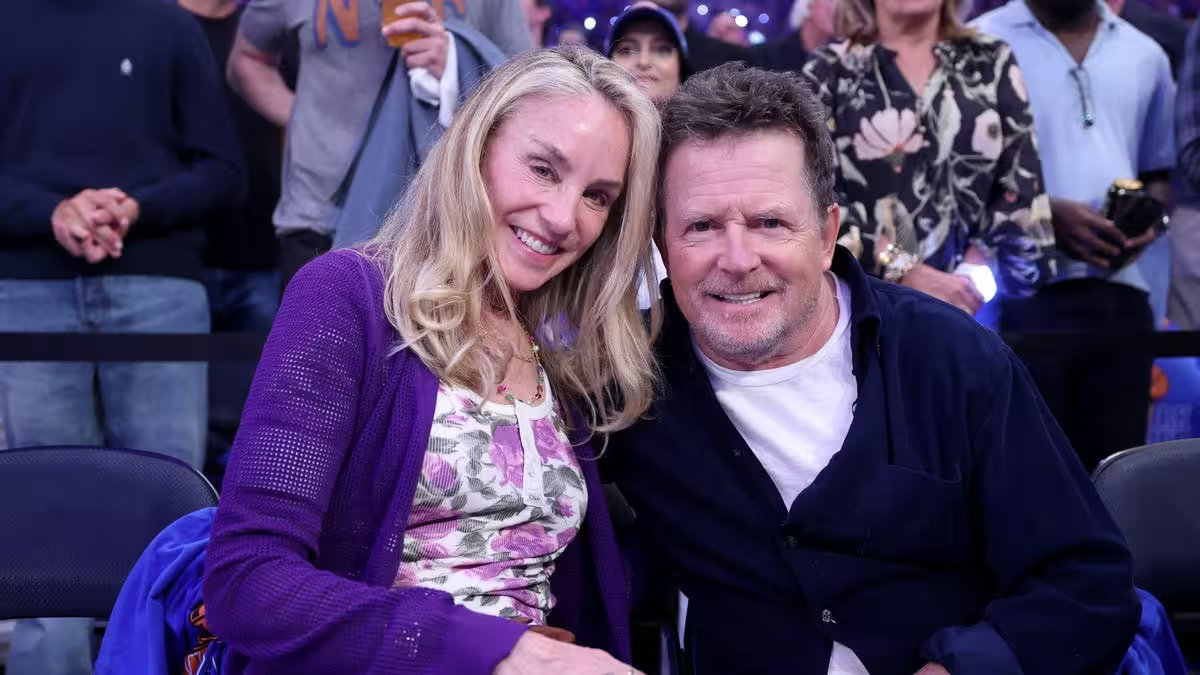
The sharpest friction comes in summer, when Ginny has already given birth and she and Anne have moved in together with the baby. Anne is Nick’s ex-wife. Ginny is the much younger woman he left her for. The show turns that triangle into part of the joke and part of the ache, with Anne openly baffled by the life she has been handed and Ginny settling into a role so fully that she is said to be absurdly devoted to motherhood. It is the kind of premise that could collapse under its own awkwardness, but the series keeps finding ways to make the discomfort feel lived-in instead of cruel.
Elsewhere, Danny and Claude want a baby, Jack has found a man friend for beach play dates, and Kate and Jack are described as freeballing, the show’s own name for their decision to grow apart on purpose. That balance of collapse and mischief is what keeps the season moving. Big Thanksgiving ends with Jack kicking the turkey down the stairs and twisting his ankle, while Little Thanksgiving jumps back to the Covid pandemic, when Steve was alive. The review’s judgment is clear: the second season does not just repeat the first. It sharpens the formula by letting the characters remain messy, funny and unfinished, which is exactly why the show still works.
What remains unanswered is how that seasonal machinery settles once the Thanksgiving episodes are done. For now, the show has made its case: after Nick’s death, the comedy is not about restoring order. It is about watching the people he left behind keep rearranging their lives and somehow finding more material, and more truth, in the wreckage.
