


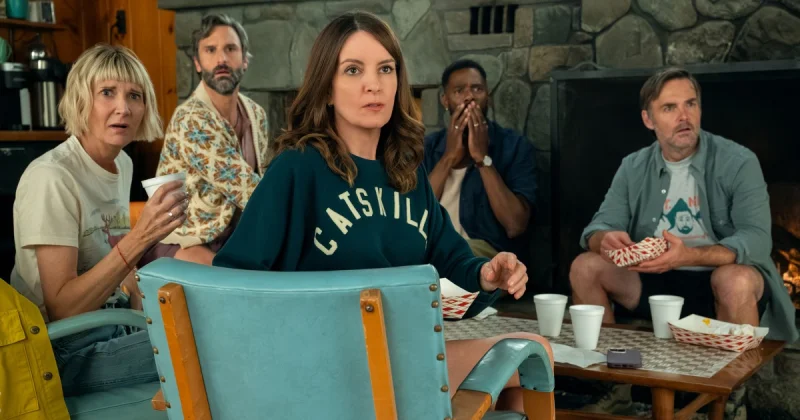
The second season of The Four Seasons has arrived as a sharper, sadder and funnier continuation of Tina Fey’s midlife comedy, with the latest round of vacations pushing the characters deeper into the mess Nick left behind. The follow-up is being praised as even more perspicacious, poignant and hilarious than the first season.
That matters now because the show’s appeal lies in how it turns four fancy holidays into a running argument about marriage, grief and friendship, with two gag-packed episodes for each season of the year. Fey, Tracey Wigfield and Lang Fisher built the series as a 2020s update of the 1980s film of the same name, and the structure keeps forcing the same group back together just as their lives split further apart. A reader searching for four seasons season 2 is really looking for one thing: whether the show found a way to top what worked before. By this account, it did.
The new season keeps making that case through the specifics. Nick, played by Steve Carell, died at the end of season one, and the aftermath has reshaped everything around Kate and Jack, Danny and Claude, and Anne, Nick’s ex-wife, and Ginny, the much younger woman he left Anne for. In summer, Ginny has given birth, and Anne and Ginny are living together with the baby. That arrangement gives the comedy its sharpest edge, because the show never lets the emotional absurdity hide the practical one. Anne’s position is not abstract grief; it is daily life with the woman her husband left her for, under the same roof, with a baby in the middle of it all.

The series has always preferred awkward proximity to tidy resolution. In spring, the grief-stricken sextet went on an upstate hike to scatter Nick’s ashes from his favourite mountain, only to be interrupted first by a Brownies group, then by mutual loathing and Danny forgetting the ashes, and finally by an overnight stay in a retro motel during an active manhunt in the area. By summer, Danny and Claude want a baby, Jack has found a man friend for beach play dates, and Kate and Jack describe their decision to grow apart on purpose as “freeballing,” which is the kind of line the show can land without slowing down to explain itself. One of the characters even sneaks in the observation that there is no Beyoncé song for this kind of arrangement.
What gives the season its bite is that the grief has not settled the relationships; it has scrambled them. Anne’s living arrangement with Ginny could have been played as reconciliation or punishment, but the show treats it as something more uncomfortable: a family structure nobody would choose, then everybody has to inhabit. That friction is exactly what makes the comedy work, and it is why the show can pivot from heartbreak to a joke about middle-aged straight men making new friends and still feel honest.
The holiday structure keeps the pressure on. Big Thanksgiving ends with Jack kicking the turkey down the stairs and twisting his ankle, while Little Thanksgiving jumps back to the Covid pandemic, when Steve was alive, folding the past into the present without offering anyone an easy escape. The bigger question is not whether the series can keep the jokes coming. It is whether this uneasy new household around Anne, Ginny and the baby can keep evolving without losing the sharp emotional imbalance that makes The Four Seasons work in the first place.
