


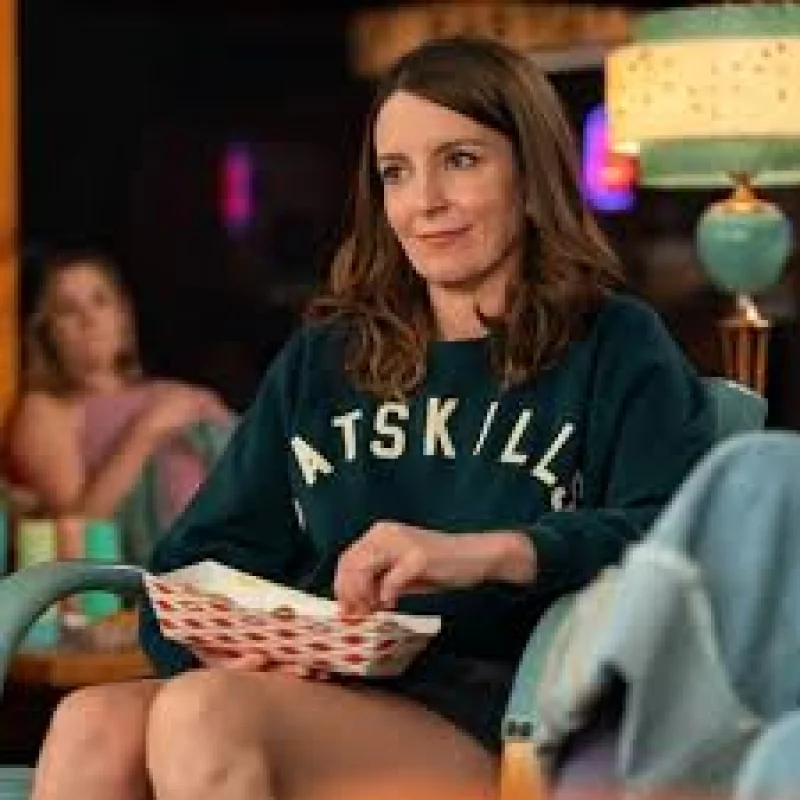
Netflix’s Four Seasons takes the 1980s film of the same name and gives it a zippy 2020s update, then makes the whole thing hurt a little more. Tina Fey co-created and wrote the series with Tracey Wigfield and Lang Fisher, and in its second season she pushes the comedy deeper into grief, remarriage and the awkward business of staying in one another’s lives after a death.
That death is still the engine. Nick, played by Steve Carell, died at the end of season one, and season two keeps circling the aftershocks around three couples who no longer fit together neatly. Kate and Jack, a married pair played by Fey and another actor, are trying to work out whether they should stay married in the old sense or, as Kate puts it, “grow apart on purpose.” Danny and Claude remain a gay couple, while Anne, Nick’s ex-wife, is now tied to Ginny, the much younger woman Nick left her for. Ginny is heavily pregnant with Nick’s baby when the season begins, and Anne’s response to their strange new intimacy carries the sort of line that lands because it is both funny and brutal: ladies aren’t supposed to be friends with the woman their dead husband left them for.
The show’s structure gives those turns room to breathe. Each season is built around four fancy holidays, split into two gag-packed episodes apiece, and season two is even more perspicacious, poignant and hilarious than the first. Spring starts with an upstate hike to scatter Nick’s ashes from his favorite mountain, but the attempt is derailed first by a Brownies group, then by the fact that everybody hates each other and Danny has forgotten the ashes, and finally by an active manhunt that sends the group to a depressing-town motel overnight. By summer, Ginny has given birth, Anne and Ginny are living together with the baby, and Danny and Claude want one of their own.

That shifting domestic geometry is where Four Seasons finds its bite. Fey keeps landing the kind of line delivery that made 30 Rock feel so precise, and the show keeps matching those jokes with small, awkward truths about middle age. Jack, meanwhile, has found a man friend for beach play dates, prompting Kate’s deadpan disbelief that she “didn’t think middle-aged straight men could make new friends!” The couple’s chosen arrangement is funny because it sounds like a software update and a breakup at the same time. Fey even turns that mood into a title joke of its own: “Keep Calm and Fuhgeddaboutit.”
The series is not content to let grief stay solemn. Big Thanksgiving ends with Jack kicking the turkey down the stairs and twisting his ankle, a piece of physical nonsense that feels exactly right for a show where relationships are constantly slipping out from under the characters. Little Thanksgiving is the sharper move, though: it sends the story back to the Covid pandemic, when Steve was alive, and lets the season look at loss from the other side of memory. That rewind does more than provide contrast. It underlines what the show is really doing, which is turning holiday comedy into a map of what survives after a death and what cannot be held together any longer.
Fey’s version of Four Seasons works because it knows that the joke is never just the joke. The second season answers the question the first one leaves behind: how do these people keep showing up for one another after Nick is gone? By letting them be funny, petty, sad and still stuck together, the series makes the answer plain. They do it badly, then better, and then badly again, which is more believable than grace and a lot funnier too.
