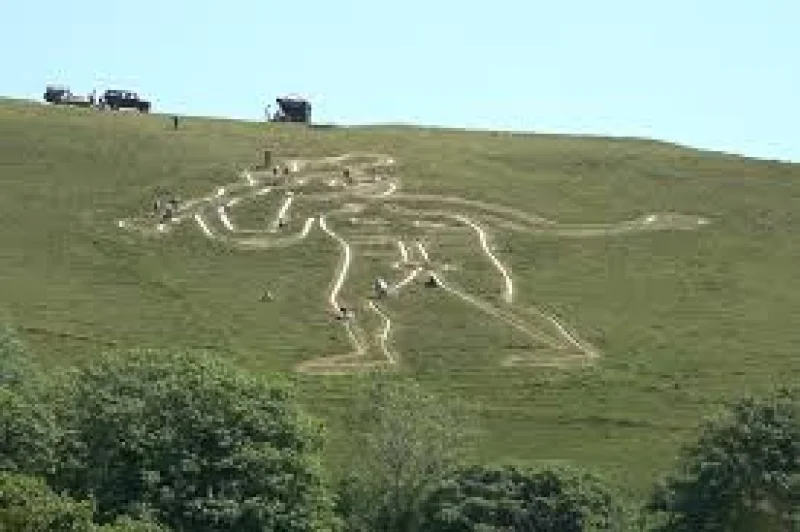
Volunteers and workers have begun restoring the 55-metre Cerne Giant in the Dorset countryside this week, using a chalk-and-water paste in an attempt to keep one of England’s most famous hill figures bright white.
The giant is normally rechalked every seven to 10 years, and the last full restoration was in 2019. This time, the team needs 17 tonnes of chalk and is trying a different method from the one used in 2008 and 2017, when dry chalk was packed in and tamped down. Luke Dawson, who is overseeing the work, said the change is meant to test whether the paste can stick better on the hillside. “It’s like a putty, which makes it easier to make it stick,” he said.
For the National Trust, which owns the site and is leading the work, the restoration is about more than appearance. Dawson said the giant is being dulled by conditions that may be changing faster than the traditional maintenance cycle can keep up with. “The giant is hundreds of years old but the modern world is certainly affecting him,” he said. He added that algae growth has begun to soften the outline, and that warmer, wetter conditions may be part of the problem. “The milder winters and wetter summers make perfect growing conditions,” he said. Dawson also pointed to heavier downpours, saying more intense rainfall can increase runoff and gradually wear away the chalk.

That pressure comes as the hill itself is proving harder to work on in the heat. Morning and afternoon shifts had been used in previous years, but the afternoon sessions are being cancelled because of the weather. Workers are rechalking for 20 minutes an hour, and two gazebos have been set up at the top of the hill to give them shade while they work.
The figure is a fixture of the Dorset landscape, and the trust has been trying to secure more of the surrounding land as part of its protection. Earlier in 2024, a nationwide fundraising appeal helped it buy significant areas around the giant after the campaign reached its £330,000 target in 60 days. Donations came from across the UK and as far away as Australia, Japan and Iceland, a sign of how far the appeal travelled for a local landmark.
The public response reflects what Dawson described as the giant’s place in village life. “It’s a beloved figure,” he said. “Everyone in the village has a connection with the giant.” Resident Debby van den Berg put it more simply: “But this is so special, so.”
The restoration now underway is an experiment as much as a clean-up. The giant has been rechalked for centuries to keep its outline visible across the Dorset countryside, but the combination of algae, wetter weather and heavier rainfall is forcing those in charge to adjust. If the paste works, the next rechalk may look different again.