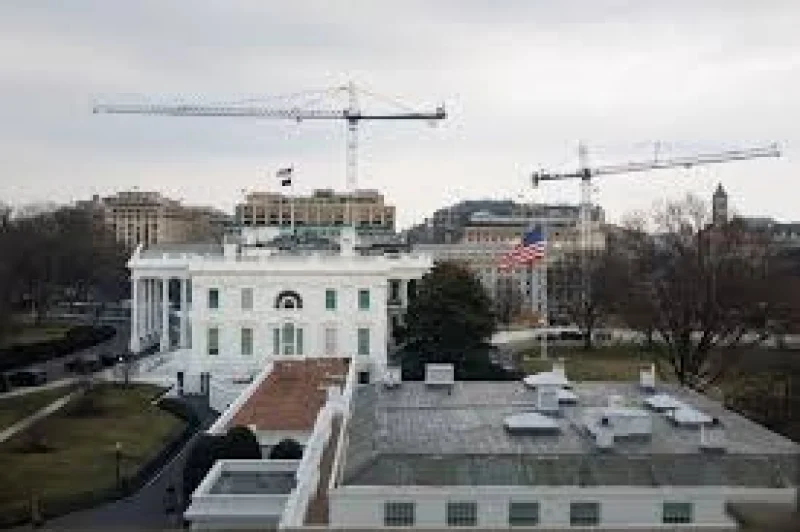
The Trump administration told a federal appeals court on Friday morning that no judge can stop construction of Donald Trump’s $400 million White House ballroom and underground secure facility, pressing its bid to overturn a lower court order that halted the main project. Construction on the bunker area can continue while the fight plays out.
The hearing came as the White House dispute moved into the Washington DC Circuit Court of Appeals, where the administration asked judges to reverse a ruling that blocked work on the ballroom site after the East Wing was demolished. The National Trust for Historic Preservation sued the National Park Service and the administration in October after Trump ordered the teardown, saying the project began without the kind of review and approvals district and federal law can require.

That legal challenge now turns on a basic question of control: whether a president can push ahead on federal property before the ordinary approval process is finished, or whether courts can step in first. The administration has pointed to national security imperatives, and Trump has repeatedly invoked the security threat, including after the failed assassination attempt at the White House Correspondents Association event in April. On Friday morning, the argument became more concrete when the US Senate advanced a long-delayed immigration spending bill only after Republicans removed $1 billion in funding for US Secret Service security upgrades tied to the proposed ballroom.
Inside the courtroom, the split was sharp. Justice Patricia Millett asked when the ballroom and bunker complex became a fait accompli for the government’s lawyer, Yaakov Roth, who replied, “On these theories, I think that’s right.” Roth also said that if Congress had weighed the equities and reached a conclusion, he was not sure a court could second-guess that decision. Thad Heuer, arguing for the preservation side, answered with a line that cut to the center of the dispute: “Under Marbury v Madison, it is emphatically the province of the judicial department to say what the law is,” he said. He added that the government’s position amounted to the claim that even a lawless action of this type could never be stopped by the court.
Heuer framed the case in plainer terms, asking who controls the property at the center of the fight — Congress, as owner, or the president, as a temporary tenant. That question is now before the DC Circuit, which is expected to decide whether the ballroom can keep rising on the East Wing site even as the lawsuit continues, or whether the lower court’s block on the main structure will stand.