


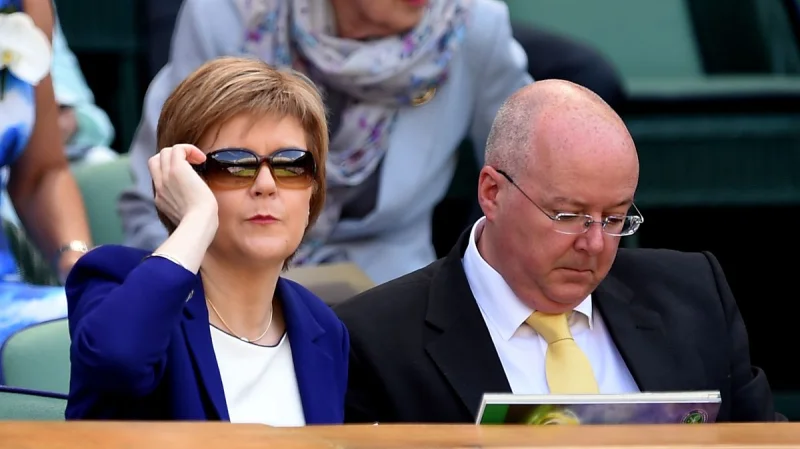
Peter Murrell, the former chief executive of the SNP, was due to enter a plea on February 20 before his court date was moved to May 25, a delay that kept the case outside the run-up to the Holyrood election and pushed it into the political aftermath instead. The Scottish Courts and Tribunal Service refused to say why the date was moved, saying only that the preliminary hearing scheduled for February 20 had been discharged under Section 75A of the Criminal Procedure (Scotland) Act 1995.
That silence mattered because extensive details from the indictment had already been published by the Scottish Sun before the original hearing date, adding to the sense that the case was being watched as closely in political circles as in court. Then, three weeks after Scots went to the polls, Murrell returned to court, pled guilty to embezzling £400k from his party and was remanded in custody. The sequence gave fresh force to a scandal that has shadowed the SNP for years and raised questions that have never fully gone away.
The wider background is Operation Branchform, the police investigation into SNP finances and how complaints about party money were handled. A complaint was made to police in March 2021, John Swinney appeared on a Sunday politics show in May 2021 saying he had no idea why the party’s treasurer resigned, and Nicola Sturgeon said in June 2021 that money had not gone missing and there was nothing to see there. By April 2023, Police Scotland had erected a tent at Sturgeon’s family home and Murrell had been arrested.
Those facts returned to the chamber on Tuesday when an urgent question was selected at the Scottish Parliament and Swinney was pressed over whether the Crown Office and the SCTS should publish more detail about the case. He refused to back those calls and insisted the SNP were “victims”, with only Murrell to blame. That stance drew immediate criticism from opposition parties, who say the episode still demands explanation.

Rachael Hamilton said Sturgeon denied in 2021 that there was anything untoward in the SNP’s finances, and that Police Scotland opened a formal investigation months after that denial. “John Swinney is desperately trying to sweep this scandal under the carpet and denied there was any problem in 2021,” Hamilton said. Jackie Baillie went further, describing a “rotten culture of secrecy and cover-up at the heart of the SNP Government.” She said: “We have seen this during the Salmond Inquiry, the legal challenge to the Information Commissioner and at its most extreme, the embezzlement of SNP supporters money.”
Baillie also said: “I’m not sure if any of that reflects the truth,” before adding: “How can the public trust John Swinney when he is the man who is the architect of this culture of secrecy?” The row has only deepened because calls were also made for the Crown Office to explain why Sturgeon was not charged in connection with Operation Branchform, a question Swinney did not answer when he appeared before parliament.
The case now sits at the point where law and politics collide. Murrell has admitted taking money from his own party, the timing of the plea kept the issue alive well beyond the election, and the first minister is left defending a record that critics say was built on reassurance long before the facts were fully known. The unanswered question is no longer whether the scandal existed; it is how much of it the SNP leadership knew, and when.
The details that have surfaced — from the £700 bag and five grand watch to the three grand coffee machine — have become symbols of a larger dispute over trust, money and accountability. For Swinney, the damage is not just Murrell’s guilty plea. It is the fact that, years after the first complaint and after repeated denials from the top of the party, the controversy still has enough force to reach the Scottish Parliament floor.
That is why Tuesday’s exchange mattered. It was not simply about a court case that has already ended in a guilty plea. It was about whether Scotland’s governing party can persuade voters that the story of its finances is finally being told in full, or whether the culture of secrecy critics describe is still running deeper than the leadership wants to admit.
