


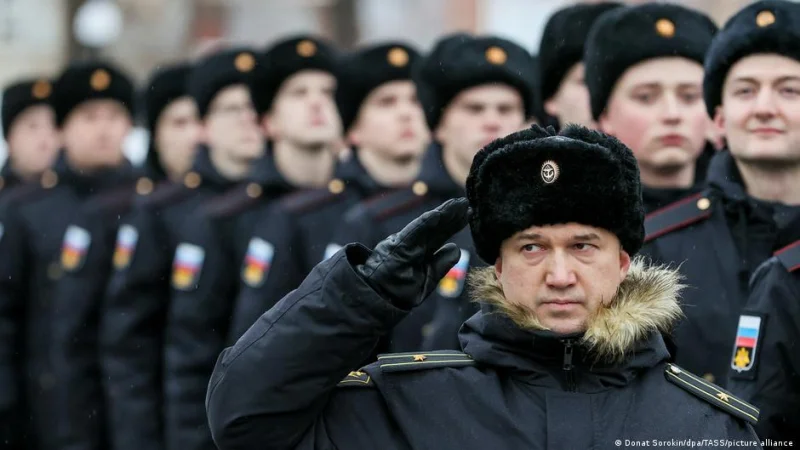
Vladimir Putin on Monday signed a decree wiping out debts of up to 10 million rubles for new military recruits and their spouses, another effort to push men into the armed forces as Russia presses its invasion of Ukraine. The relief applies to people who signed a contract after May 1, but only if the agreement runs for at least one year and is tied to what the Kremlin calls the tasks of the special military operation.
The debt exemption covers obligations incurred before May 1 and is designed to reduce the financial burden on recruits at the moment they commit to military service. In dollar terms, the ceiling amounts to about $139,273, or €119,646, a large sum in a country where the state has spent more than four years offering increasingly generous incentives to fill the ranks.
Putin also on Monday enacted a separate law that would allow Russian armed forces to be deployed outside the country to protect Russian citizens facing justice in other countries. The measure gives Moscow a legal basis to intervene in third countries where the liberty of Russian citizens is threatened by judicial proceedings or arrests carried out without Russia’s permission or outside international law.
Andrey Kartapolov said the legislation would let Moscow act in cases like that of Alexander Butyagin, the Russian architect who was arrested in December 2025 in Poland at Kyiv’s request over excavations in Crimea. Butyagin was later released in April 2026 as part of a prisoner exchange between Ukraine and Russia.
The two moves fit a broader wartime pattern. Russia’s economy is now on a war footing, and military needs have taken precedence over other sectors. Money has become one of the Kremlin’s bluntest recruiting tools, and the state has been trying to make service more attractive not just through cash but through the promise of status after the fighting ends.
Putin has also called for veterans of the war in Ukraine to be given prestigious positions when they return from the front, along with priority access to universities and colleges of further education. The message is clear: service should be rewarded inside Russia as well as on the battlefield.
That wider political push has been visible well beyond the army. Moscow has moved to ease passport rules for the Transnistrian Moldavian Republic, and the Kremlin’s approach to the breakaway region has kept neighboring Moldova and Ukraine watching closely. The overlap between recruitment, wartime policy and Russia’s treatment of its citizens abroad shows how deeply the conflict has entered the legal and political machinery of the state.
For recruits carrying debt, the promise is immediate and personal. For the Kremlin, it is another way to keep men signing contracts while the war grinds on and the state keeps widening the boundaries of what it is willing to do in service of it.
