


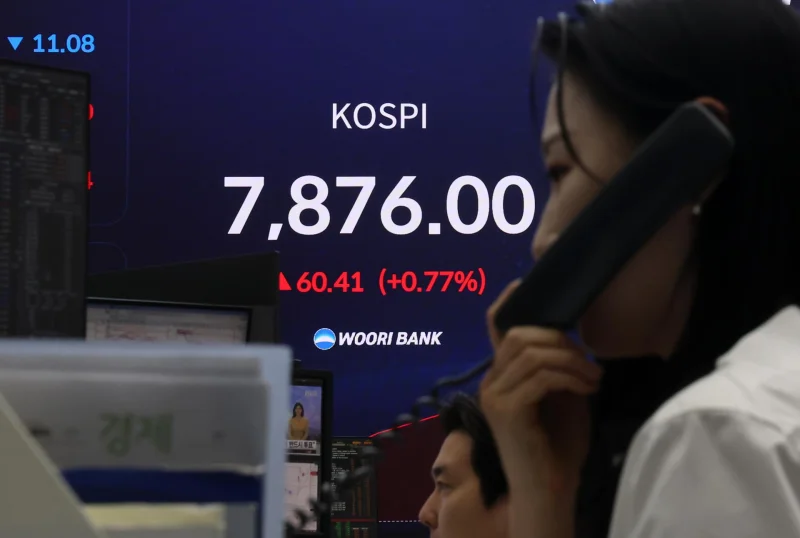
Exchange-traded funds tied to Samsung Electronics and SK hynix are heading for overseas markets, with new products lined up in Hong Kong and the United States as global investors chase Korean chipmakers. On Monday, industry officials said Hong Kong-based CSOP Asset Management plans to list a KOSPI 200 ETF on the Hong Kong Stock Exchange in the second half of the year, while Leverage Shares filed with the U.S. Securities and Exchange Commission to launch a leveraged memory-chip fund.
The U.S. filing is for the Leverage Shares 2X Long Memory Daily ETF, which is designed to deliver twice the daily return of the Roundhill Memory ETF. That fund launched in early April and has drawn heavy inflows amid the artificial intelligence boom and surging demand for memory chips, with assets now approaching $10 billion. Samsung Electronics and SK hynix together account for nearly half of its holdings, putting the two Korean names at the center of a trade that has rapidly spread beyond Seoul.
Hong Kong has already become a proving ground for this demand. The exchange there already lists leveraged ETFs tied separately to Samsung Electronics and SK hynix, and the SK hynix-linked product has attracted about 7.9 trillion won in assets, compared with roughly 2.4 trillion won for the Samsung Electronics-linked ETF. Those figures show how far foreign investor appetite has moved past simple stock picking and into packaged exposure to Korea’s biggest memory-chip producers.
Lim Eun-hye said the arrival of a KOSPI 200 ETF could widen access for overseas investors looking at Korean shares. She said overseas interest is growing as Korean equities continue to outperform, adding that the trend raises the odds that more Korea-related ETFs will come to global markets. For now, the latest filings suggest the next wave of demand is likely to track the same theme that has already turned sk hynix stock and its Korean peers into major draws abroad.
The immediate test is whether the new funds can match the scale already set in Hong Kong and by the Roundhill vehicle in the U.S. If they do, Korean chipmakers will have moved from being an AI-era market story at home to one of the most actively packaged overseas bets on the sector.
