



South Korea’s Kospi index plunged nearly 9% within minutes of Monday’s opening, forcing the stock market to halt trading for 20 minutes under its circuit breaker system. When trading resumed, the benchmark was still down about 5%, after a shock sell-off that hit major technology names including Samsung and SK Hynix.
The move came as investors dumped tech shares across Asia, with Japan’s Nikkei 225 sliding around 4% and the Hang Seng Index and Shanghai Composite also lower. On Wall Street, the Nasdaq had already fallen around 4% on Friday, its biggest drop in more than a year, and the pressure was compounded by a jump in oil prices after strikes were exchanged between Iran and Israel. Brent crude rose 3.7% to $96.50 a barrel in Asia on Monday, while US-traded crude gained 3.5% to $93.70.
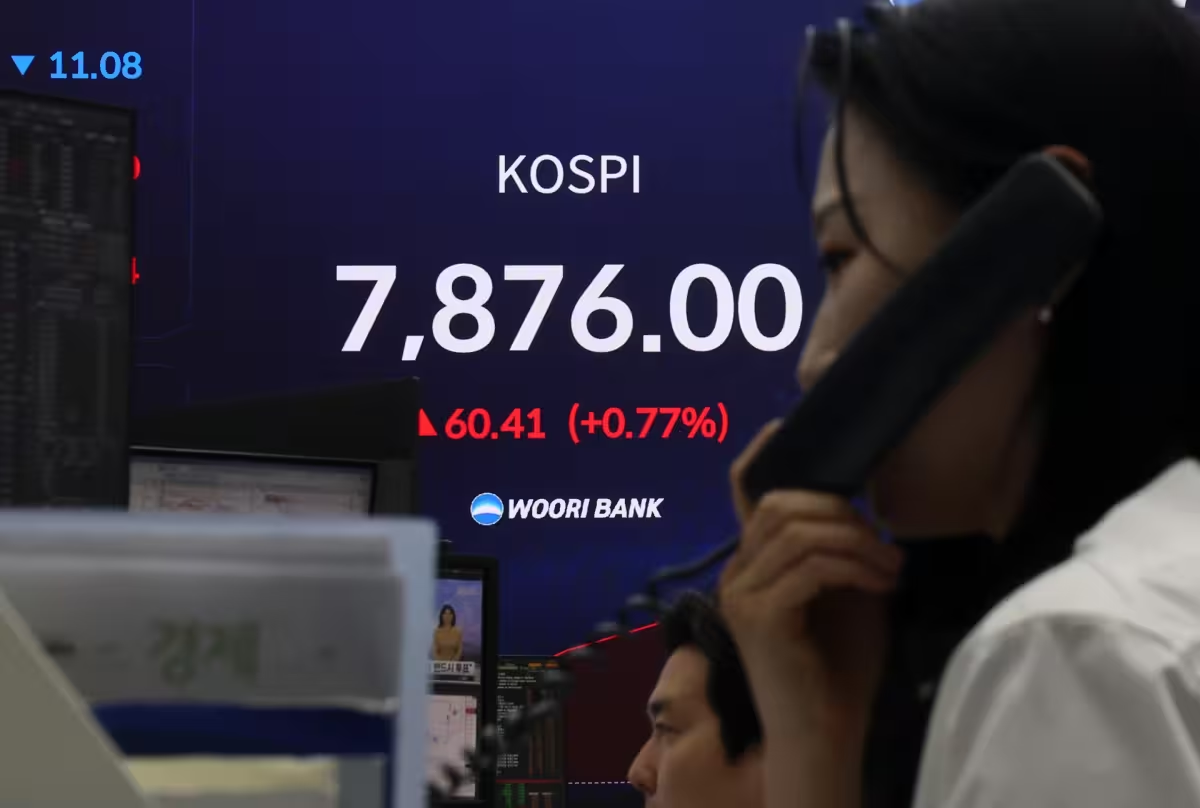
The market freeze was triggered for the third time this year, underscoring how quickly the Kospi can swing in a market dominated by technology stocks. Charu Chanana, describing the sell-off as a “messy mix” of several shocks, said investors were in the middle of “repositioning” and still waiting for evidence of “real revenue” from artificial intelligence spending. “The burden of proof has gone up,” she said.
That caution sits awkwardly beside President Lee Jae-myung’s view that domestic shares remain “slightly undervalued.” Lee’s comment reflects a market that had enjoyed huge gains in recent months on a wave of investment in South Korean tech companies, but Monday’s drop showed how fragile that momentum is when the same stocks come under pressure. The circuit breaker stopped panic trading, but it did not stop the retreat.
For now, the open question is not whether South Korea can absorb another volatile session — it already did — but how long the sell-off in tech stocks will keep dragging the Kospi lower.
