


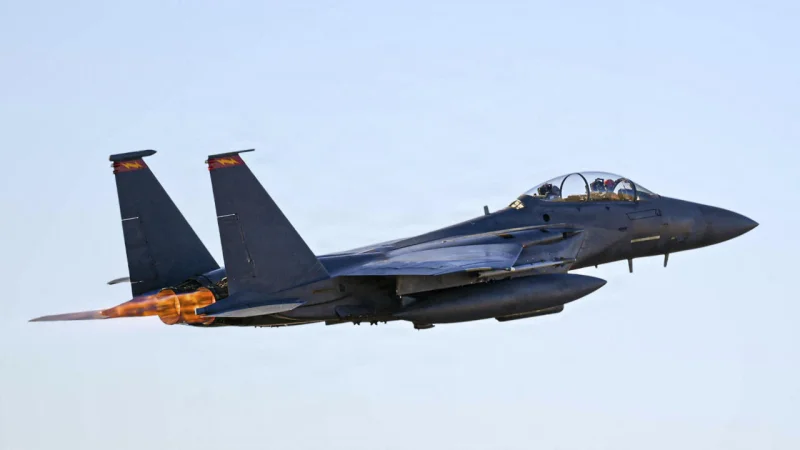
Ayatollah Mojtaba Khamenei said regional countries would “no longer serve as shields for American bases” after US forces struck missile sites and vessels allegedly laying naval mines in southern Iran, sharpening the confrontation as Tehran and Washington kept up exchanges aimed at ending the war.
The statement, carried on state television, landed as Iran’s top negotiator, Mohammad Baqr Qalibaf, travelled to Qatar to try to reach agreement on a mechanism for releasing about $24 billion in frozen Iranian funds under a memorandum of understanding being negotiated with the United States. The money, frozen overseas, has become one of the central bargaining chips in the talks, even as the military pressure around Iran continues to rise.
Those pressures were visible elsewhere in the region on Tuesday, when the Israeli military warned residents of the southern Lebanese city of Nabatiyeh to evacuate immediately ahead of expected attacks against Hezbollah. The army’s Arabic-language spokesman, Avichay Adraee, posted on X: “For your safety, you must evacuate your homes immediately and move north of the Zahrani River. Anyone who is near Hezbollah members, facilities or military equipment is putting their life at risk!” The warning came as Israel continued to strike Lebanon despite agreeing to a ceasefire and peace talks with Lebanon.
The shifting front lines have made diplomacy harder to separate from battlefield reality. The US strikes in southern Iran came while Tehran and Washington were still exchanging proposals and messages aimed at stopping the war, a process that now appears tied not just to security guarantees but to the fate of Iranian assets held abroad. The talks in Qatar are expected to focus on whether the mechanism can be made workable in practice and whether the release of funds can move on a timetable both sides can live with.
That same mix of pressure and bargaining has left civilians in the region facing the consequences first. In Lebanon, the evacuation order signaled the likelihood of more attacks. In the wider region, the words from Tehran suggested Iran is trying to frame the conflict as one that now reaches beyond its borders and the American installations it sees as protected by neighboring states. The result is a diplomacy track running at the same pace as a military one, with neither side showing signs of stepping back.
Other regional flashpoints also remain active. Ireland is aiming to pass a law by mid-July curbing goods trade with settlements in the Israeli-occupied West Bank, a measure first promised in October 2024 and later narrowed to goods only. Separate violence in the West Bank has continued too: on May 21, settlers stole around 45 sheep from the home of Sameeha Rasheed in Masafer Yatta before dawn. The events underscore how the conflict continues to spread through law, trade and daily life, not only through missiles and air raids.
Iran also executed Gholamreza Khani Shakarab for alleged intelligence cooperation and espionage in favour of the Zionist regime, a move that reflects how deeply the confrontation has penetrated the country’s domestic security apparatus. With military strikes, evacuation warnings, prisoner cases and frozen funds all moving at once, the next test is whether the Qatar talks can produce anything that survives contact with the fighting.
