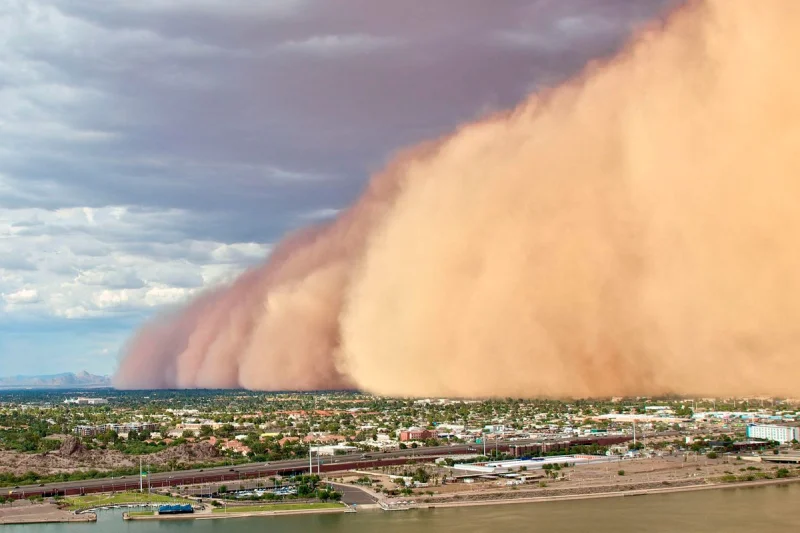
Dust storms are becoming a bigger weather threat across the American Southwest, and the numbers are moving fast enough to make the change hard to ignore. In Phoenix, the region’s most exposed city, a recent analysis found 189 dust events over 13 years, a tally that underscores how often the desert air can turn suddenly dangerous.
NOAA scientists analyzing the United States’ desert regions found that severe dust storms in the Southwest more than doubled between the 1990s and the 2000s, a 240% jump. Arizona leads the nation in dust storm activity, and Phoenix typically sees one to three massive haboobs each year, often arriving from the south and east after storm outflows race down from higher terrain to the east and north of the city.
The storms are not one thing. Thunderstorm outflows send downdrafts to the ground at 50 to 80 mph, pushing up a sweeping wall of dust. Heatwaves and drought can leave soil lighter and more powdery, making it easier for air currents to lift. Strong surface winds form where high- and low-pressure systems meet, and farming can add to the problem by stripping soil of the stability that keeps it in place.
The scale is not limited to Arizona. California’s dust storms affect an area larger than 55,000 square miles in a typical year and can encompass a population of nearly 5 million. A separate analysis found that dust events in California’s central valley rose by about 0.41% per decade between 2008 and 2022, with the state’s worsening dust problem appearing to stem from mass fallowing. The Southwest remains the hardest-hit region, but the plains and the Intermountain West are also dealing with these storms more regularly. For readers who have watched other recent weather disruptions, from quakes and dust in Iran to fast-moving desert storms elsewhere, the pattern is part of the same broader strain on dry landscapes.
The backdrop reaches back to the 1930s, when the Dust Bowl was cited as evidence of man-made ecological disaster caused by deep plowing across millions of acres of farmland. The difference now is that the warning signs are arriving in real time. As drought, heat and wind continue to align over dry ground, the question is no longer whether dust storms belong to a dusty past, but how often they will shape the future of the West.