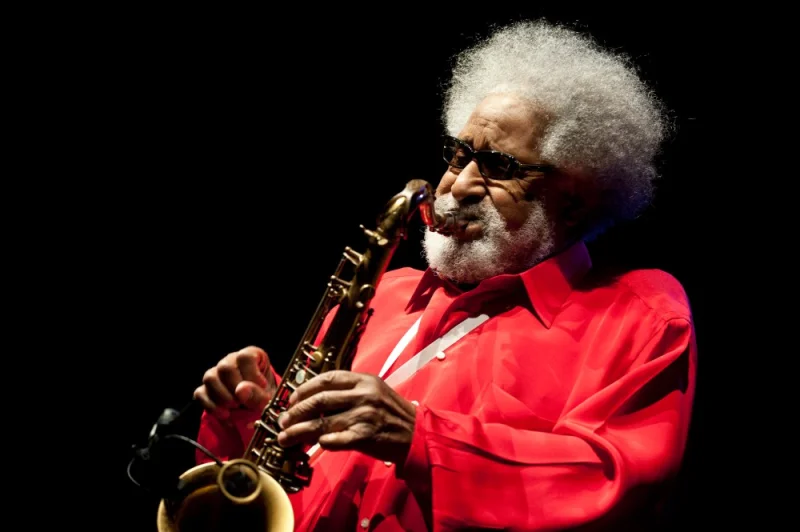
Sonny Rollins, the tenor saxophonist known across jazz as the Saxophone Colossus, has died at 95, according to a social media post from his family. No cause of death was cited.
Rollins was one of the defining voices of modern jazz, a player whose power, invention and command put him on the same ground as the era’s other giants. He wrote tunes that became standard entries in the jazz book, including Airegin, Doxy, Oleo and St. Thomas, and his 1956 showdown with John Coltrane on Tenor Madness remains one of the most closely heard tenor battles in the music. St. Thomas, built as a calypso adaptation, reflected his family’s Caribbean origins. In 1957, he also recorded Way Out West around his interpretations of cowboy songs, a reminder that Rollins could turn almost any source into something unmistakably his own.
Born Theodore Walter Rollins in Harlem, New York, he started on piano, moved to alto saxophone and then settled on tenor. He learned jazz craft at Benjamin Franklin High in East Harlem, where he played alongside Jackie McLean, Kenny Drew and Art Taylor, and through a classmate he met Thelonious Monk. By 1949, at 18, he had made his recording debut for Prestige Records in a band led by J.J. Johnson. In quick succession he recorded with Bud Powell, the Modern Jazz Quartet, Thelonious Monk and Miles Davis, and Davis recorded three of his compositions at a 1954 session.
The climb was interrupted by addiction. Rollins recorded only intermittently in the early 1950s because he had acquired a debilitating heroin habit. He was arrested and jailed on drug charges in 1950 and again in 1953 for parole violation. That same year, at a Miles Davis date that paired him with Charlie Parker, Parker urged him to clean up. Rollins checked into the federal drug facility in Lexington, Kentucky, in late 1954 and kicked the habit there. His career took off in earnest in 1955.
That made him more than a survivor; it made him one of the most enduring improvisers in jazz, praised by critics as both an invincible presence and one of the most cunning, surprising and original of jazz visionaries. Yet he also looked askance at the limelight and took two protracted hiatuses from recording and performing at the height of his powers. He received a Grammy Lifetime Achievement Award, the Kennedy Center Honors and a National Medal of Arts, and even his nickname Newk, from a resemblance to major league pitcher Don Newcombe, became part of the lore around him. The family’s post gave the final answer to the question that had shadowed admirers for months: Sonny Rollins is gone, but the music he left behind is fixed in the center of jazz history.