


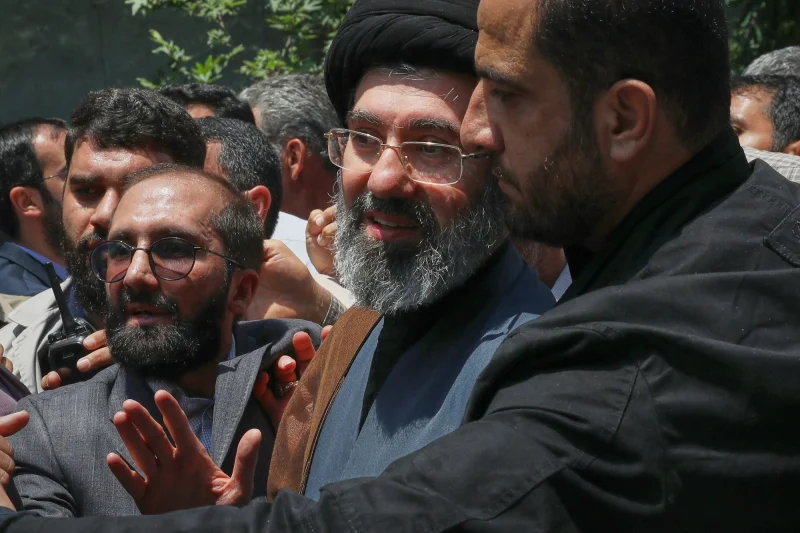
Iran’s Supreme Leader Mojtaba Khamenei has spent nearly three months in hiding, a disappearance counterterrorism analysts now compare to the final years of Osama bin Laden. The comparison sharpened after President Donald Trump paused a planned strike on May 19 and then told reporters on Wednesday that he was in "no hurry."
Khamenei remains out of public view, even though he appeared to share three posts on his official X account on May 18. One of those recent messages declared a "holy war," a sign that the online presence has continued even as the man at the center of it has not been seen in person.
Dr. Omar Mohammed said the case marks a new phase in the long confrontation between Washington and Tehran. "For the first time in the history of the Islamic Republic, the United States has done to Tehran what it spent two decades doing to al-Qaeda and ISIS," he said. He added that "the U.S. has driven its leader into the same kind of operational invisibility that bin Laden lived in for 10 years in Abbottabad."
Bin Laden founded al-Qaeda in the late 1980s and masterminded the Sept. 11, 2001, terrorist attacks against the United States. After the U.S. invasion of Afghanistan, he evaded capture for a decade by hiding inside a fortified compound in Abbottabad, Pakistan, relying on a network of physical couriers to avoid Western electronic surveillance. U.S. intelligence eventually tracked one of those couriers to the compound, and a 2011 Navy SEAL raid killed him.
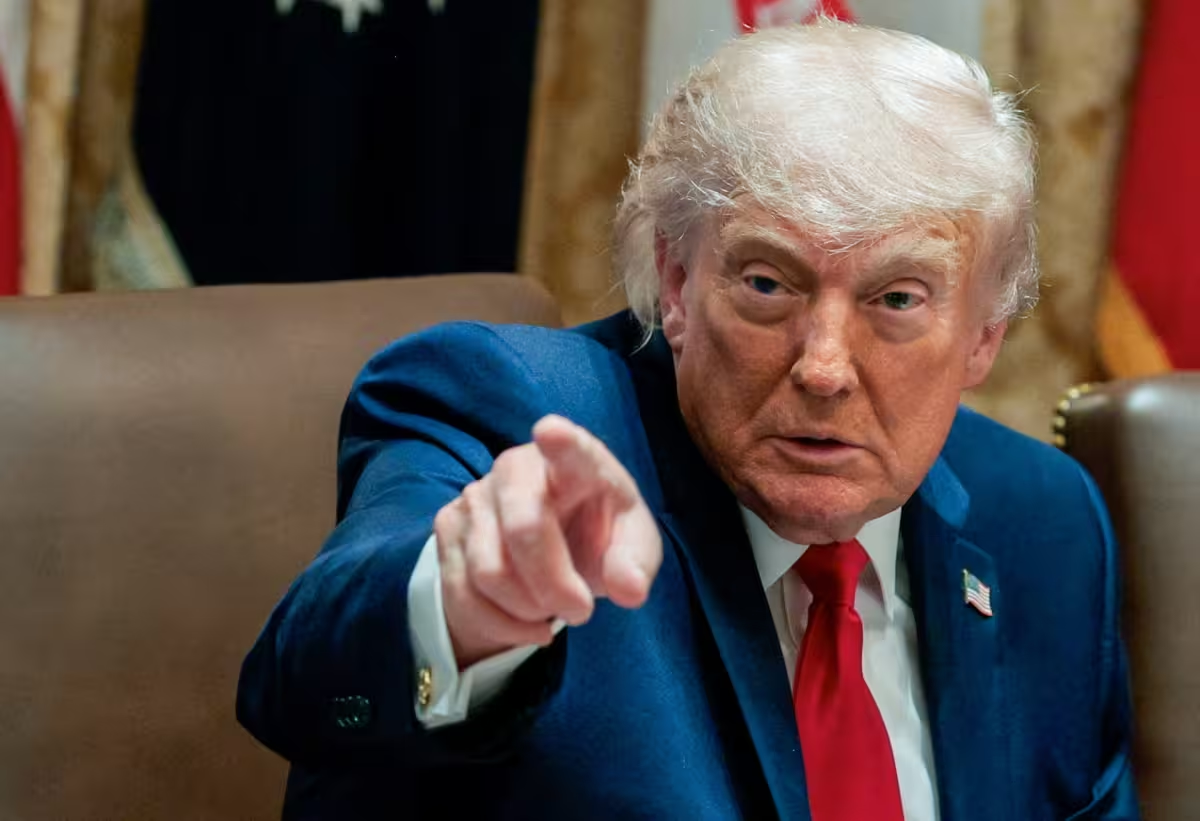
Mohammed said the pattern mattered because it showed how a leader can disappear without disappearing from history. He said bin Laden "stopped releasing dated videos around 2007 and confined himself to audio messages carried by hand," and that he "survived with no cables out of the Abbottabad compound. Communications were carried by hand by two trusted couriers, the Kuwaiti brothers."
The analyst drew a direct line from that model to Tehran. "Both Mojtaba Khamenei and bin Laden inherited their status on the back of an American operation, and both responded the same way: by ceasing to exist publicly," he said. He added that bin Laden "stayed hidden for the rest of his life because the moment he surfaced was the moment he died. Mojtaba’s incentives point the same way. Mojtaba Khamenei won’t emerge."
Mohammed said the lesson from Abbottabad was clear. "The Abbottabad lesson, which Tehran will have studied closely, is that the safest hiding place is not a cave in Tora Bora but a walled compound in a garrison town," he said. Bin Laden lived roughly a mile from Pakistan’s top military academy and hid in plain sight behind high concrete walls and barbed wire. The analyst said the likely Iranian equivalent would be "hardened sites under or alongside IRGC facilities," a reference to the Islamic Revolutionary Guard Corps.
That is where the story now turns. Trump has paused a strike, but he has not closed the door, and Khamenei’s silence has become its own signal. The Supreme Leader may be posting online, yet the part that matters most is the part no one can verify: where he is, who is shielding him, and how long a leader can stay hidden before the hiding itself becomes the message.
