


The biopic Michael has landed in cinemas across the globe, and the response has been split from the start. The two-hour film, written by John Logan, directed by Antoine Fuqua and produced by Graham King, covers only half of Michael Jackson’s forty-year career, moving from the late 1960s to the late 1980s.
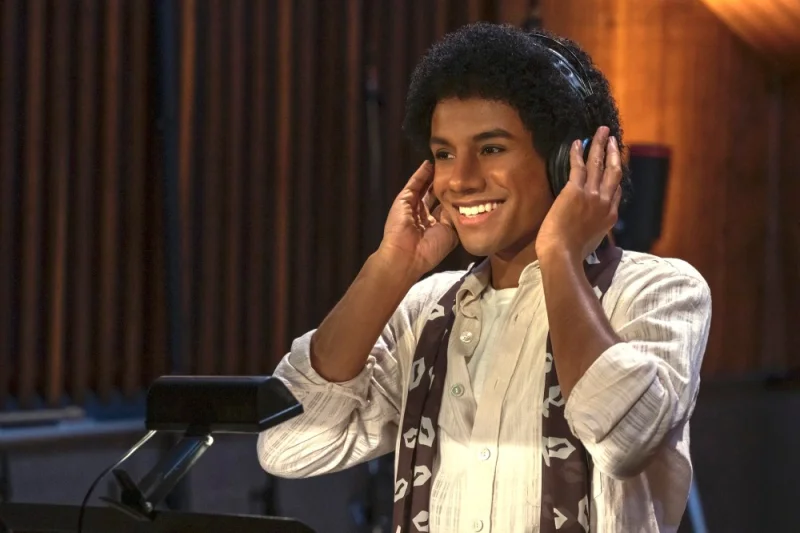
Jaafar Jackson, the singer’s real-life nephew and the son of Jermaine Jackson, makes his screen debut in the title role. Coleman Domingo plays father Joseph Jackson, while Nia Long appears as matriarch Katherine Jackson. The cast follows the family from the Jackson Five’s signing with Motown Records founder Berry Gordy through their later move to Epic Records, where Randy joins the band and Jermaine stays behind to pursue a solo career.

The film leans heavily on performance and ascent. It includes versions of I Want You Back, I’ll Be There, Rockin’ Robin, Got to Be There and Ben, using those songs to carry the story from child stardom to the edge of superstardom. That focus helps explain why it has divided audiences since its release: for some viewers it plays like a celebration, while for others its narrow time frame leaves a fuller account of Jackson’s life out of reach.
That split matters because the film is arriving now as a public reckoning with Jackson’s image remains unfinished. The review framing around the project describes it as a tribute charting his rise from humble beginnings to legendary status, but it also notes the story stops in the late 1980s, long before the rest of his career and the controversies that shadowed it. In 1989, Elizabeth Taylor referred to him as “the true king of pop, rock and soul” at the Soul Train Awards, a line that still hangs over any attempt to put his life on screen.
Fuqua’s film does not hide the family tension at the center of that rise. Joe Jackson accuses Michael of seeing himself as better than all his family members, then relents and gives him permission to leave so long as it does not interfere with the group. That exchange cuts through the glossy rise-and-fall structure and points to the trade-off at the heart of the story: the family wanted success together, while Michael was heading toward a solo path that would eventually pull him beyond the group. Michael box office interest may draw viewers in, but the film’s real test is whether audiences accept a portrait that stops at the moment his legend was still being made.
