


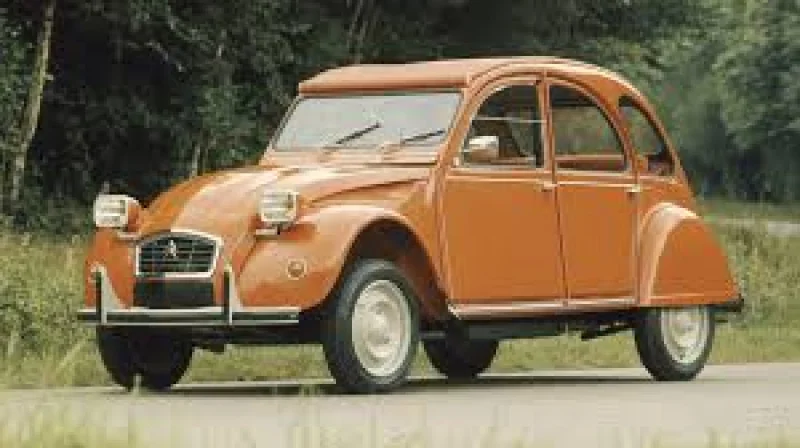
Citroen will bring back the 2CV in 2028 as an all-electric city car, reviving one of France’s best-known motoring names with a model the company says will start below €15,000, or as little as £13,000. Brand chief Xavier Chardon unveiled the plan with a blunt declaration at Stellantis’s 2026 investor presentation: “Yes, the 2CV is back.”
The teaser image shown by Citroen points to a car that keeps the old silhouette in spirit, if not in exact form. The new model has flared wheelarches, protruding round headlights and a tall, horseshoe-shaped rear, and Citroen says it will probably be less than four metres long. Chardon said the goal is to “democratize electric mobility” with a car that is “100 per cent electric, made in Europe” and priced to reach ordinary buyers, not just early adopters.
The company plans to show the budget model as a concept at October’s Paris Motor Show, giving the public its first close look before the production version arrives in 2028. Stellantis has already confirmed the electric city car will be assembled at the Pomigliano d’Arco plant in Italy, which currently builds the Fiat Panda. That puts the project inside the group’s wider 60billion Euro FaSTLAne strategy and its E-Car programme, which also includes Fiat’s own cut-price entry-level EV.
For Citroen, the return is more than a styling exercise. The original 2CV put France on wheels after World War II, and Chardon cast the new version as a modern answer to the same problem. “In 1948 the 2CV gave freedom of mobility to millions, and 80 years later the new 2CV will democratize electric mobility,” he said. He added that the future of mobility will belong less to complicated machines than to “the simplest and the most intuitive ones,” and described the new car as “a true people’s car designed for real life.”
That idea has been circulating inside Citroen for years. Pierre Leclercq leads the design team working on the Paris show car, and the company has been shaping the project around the original’s mix of affordability, light weight, practicality, versatility and character. A 2009 Revolte concept, a plug-in hybrid based on a shortened Citroen DS3, showed how the brand had already been testing the old formula in a modern form. Leclercq said the team had tried to recreate the 2CV before, calling the effort “super cool,” but also acknowledged that “you cannot say it’s something you won’t try.”
The timing also reflects a broader shift in the market. Neo-retro EVs have proved there is demand for familiar shapes and simple packaging, and the success of the reborn Renault 5 has helped make the case. Citroen is now betting that the same instinct will work for a nameplate that still carries emotional weight. Chardon summed up the ambition this way: “What truly matters is to be simply relevant. With the return of the 2CV, Citroen is back to the future.”
The question now is not whether Citroen can make people remember the 2CV. It is whether it can turn that memory into an electric car cheap enough, simple enough and practical enough to matter in 2028. On the evidence shown so far, that is exactly what the company is trying to do.
