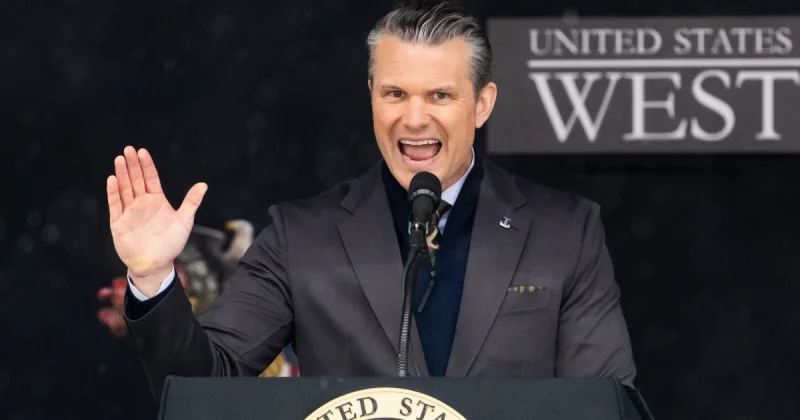
Pete Hegseth used a West Point commencement speech on Saturday to celebrate a military recruiting surge and to attack the earlier focus on diversity, equity and inclusion in the armed forces. Speaking at the United States Military Academy in West Point, New York, he told graduating cadets the Army had met its 2026 recruiting goals four months early and said the service would continue to grow.
Hegseth cast the latest numbers as proof that the force is rebounding. Just two days before the speech, he said recruiting was up across the joint force and that the Army had reached its 2026 target early. He said the Army would lead 61,500 new soldiers and said next year’s force would be larger still, framing the moment as a second record year in a row.
The Pentagon has said the Army set a 2025 recruiting goal of 61,000 and exceeded it with 62,050. That figure gave Hegseth a concrete backdrop for his argument that the service is regaining momentum after a difficult stretch. Command Sgt. Maj. Danny Basham also praised the graduating class, saying the men and women who chose to serve the nation are showing their commitment to something larger than themselves.

Hegseth used the address to draw a hard line against the policies that shaped the force before him. He said previous leaders “embraced the DEI craze,” tried to introduce diversity and inclusion studies, and hired professors who promoted anti-American ideologies at the academy. West Point, he said, is “set apart,” “special,” “above politics” and based on merit, where “how you perform” matters.
He went further in condemning one of the military’s most familiar slogans, calling “our diversity is our strength” the “single dumbest phrase in military history.” Hegseth said the idea might be debated in a civilian faculty lounge or graduate seminar, but not in military formations, where, he argued, “these ideas are what get people killed.” He said, “Diversity is not our strength. Unity is our strength.”
The speech paired upbeat recruiting data with a sharp ideological message, turning a ceremonial graduation into a public rejection of the military culture that preceded it. The immediate question now is whether the recruiting gains Hegseth highlighted become durable proof of a broader turnaround, or whether they remain a short-lived high point attached to a political fight over how the Army defines merit, readiness and unity.