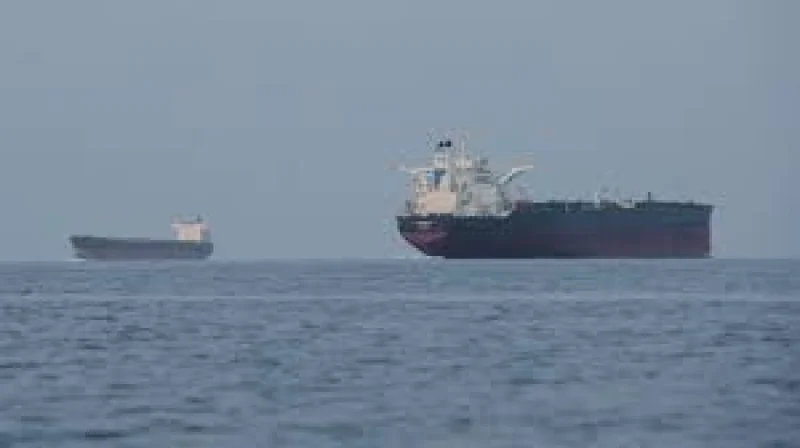
The U.S. military boarded an Iranian-flagged oil tanker in the Gulf of Oman on Wednesday and redirected it after searching the vessel, according to U.S. Central Command. The tanker, the M/T Celestial Sea, was suspected of trying to head to an Iranian port and of attempting to violate the American blockade.
The move was the latest step by the Trump administration to push Tehran to reopen the Strait of Hormuz, and it came after Trump said Monday he had called off renewed military strikes on Iran. He said he had planned “a very major attack” for Tuesday but put it off after allies in the Gulf asked him to wait two to three days because they believed they were close to a deal.
It was at least the fifth commercial vessel to be boarded since the administration imposed the blockade on Iranian shipping in mid-April, several days into a ceasefire. The blockade was designed to pressure Tehran into opening the strait and accepting a deal to end the war that began Feb. 28 with U.S. and Israeli airstrikes.
The latest boarding fits a pattern that has widened well beyond the Gulf of Oman. The U.S. military has enforced its blockade on Iran’s ports and on Iranian-linked ships far from the Middle East, including an oil tanker it boarded last month after it had already been sanctioned for smuggling Iranian crude oil.
The pressure campaign is unfolding while Iran keeps its chokehold on the waterway and shipping traffic remains badly snarled. The U.S. military recently said 1,550 vessels from 87 countries are stranded in the Persian Gulf nearly three months into the war, a figure that shows how quickly the conflict has turned into a global maritime problem rather than a regional one.
That is the contradiction at the center of the policy: Washington is trying to force a reopening of the strait by seizing ships, while the blockade itself is helping keep commerce frozen. The military action may be meant to speed up a deal, but it also deepens the risks for shipping crews and raises the stakes for any next step Trump takes on Iran.