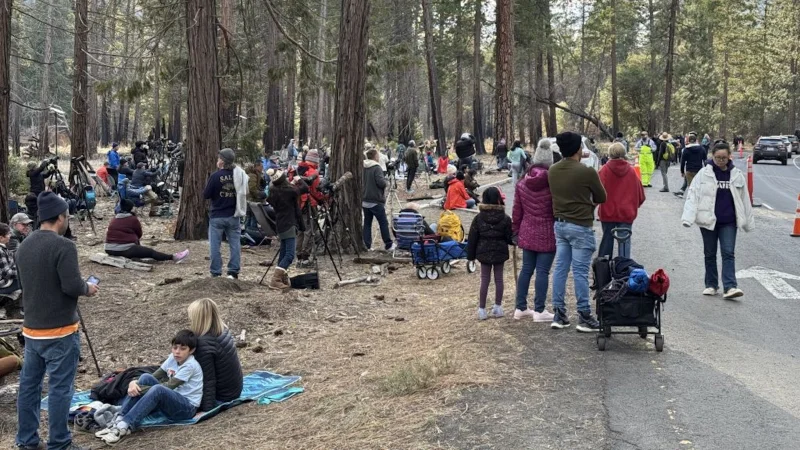
Yosemite National Park’s parking lots turned into a bottleneck on Saturday, May 2, as the first major weekend of the season without broad entry limits brought cars wedged between trees and rocks, onto curbs and into the dirt around Camp 4. On a 500-foot walk to the Lodge shuttle stop, five separate drivers flagged the narrator down, and one shuttle sat trapped behind an illegally parked car while the vehicle was being loaded onto a tow truck.
Two more tow trucks were also removing cars parked at odd angles in the same lot, while a line of vehicles stretched for the full 1.8-mile road between Camp 4 and the El Cap picnic area. Parking along that road is illegal, but that did not stop drivers from lining it with cars in both directions, turning one of the park’s busiest corridors into a jam that was visible from almost anywhere nearby.
“This is crazy,” the narrator said as the crowding unfolded. Katy, who was heading to El Cap Meadow after getting ice cream, summed up the mood another way: “I just got ice cream, and I’m heading to El Cap Meadow to hang,” she said, while the parking crunch pushed people into the road, onto shuttles and toward tow trucks. An Aramark employee offered the bluntest verdict: “I was here in 2023, and it was a shit show,” the worker said.
The scene carried extra weight because Yosemite officials have spent five years testing timed-entry systems to manage the crush. The park drew 4.42 million visitors in 2019, the highest number since records began in 1906, then introduced its first reservation system in 2020 after the park shut down for three months. Day-use reservations were required for most visitors in 2020 and 2021 unless they booked lodging in advance, arrived by public transit, or held a wilderness or Half Dome permit. In 2022, Yosemite shifted to a peak-hours system for arrivals between 6 A.M. and 4 P.M., then temporarily halted reservations in 2023 except for the last three weekends of February.
That pause did not go well. A 224-page National Park Service report later said the 2023 season brought long lines at entrance stations and added strain on employees, resources and infrastructure. A separate 2023 survey found 51 percent of visitors said parking shortages hurt their trip, while 26 percent said crowding at restrooms and visitor centers did the same. Park officials brought back entry limits in 2024 and 2025 in a more limited form, with reservations required every day during the busy summer period in those years, but only on weekends in the period described here.
The tension now is that Yosemite appears to be relearning a lesson it has already documented in detail: when limits ease, the parking problem comes back fast. On Saturday, the congestion was not an abstract complaint or a seasonal nuisance. It was tow trucks, blocked shuttles and a roadside line of cars so long it ran nearly two miles through a valley built for scenery, not storage. The park’s next move will determine whether the crush becomes a one-weekend warning or the start of another summer of gridlock.