
Asif Kapadia has made a film about Kenny Dalglish using only archive footage, and he says the project grew out of a childhood obsession. Kapadia had a poster of Dalglish on his wall as a boy, and now his latest documentary is built around the Liverpool great’s voice, with Dalglish himself narrating the film.
The director said the 75-year-old remains a figure people around the world have misunderstood because they never saw how modern he was on the pitch. Dalglish spent a 22-year playing career at Celtic and Liverpool FC, and Kapadia said viewers who have seen the film were struck by how closely his football still resembles the game played by managers such as Pep Guardiola and Jürgen Klopp. Kapadia called the film “an ode to an era that doesn’t exist any more.”
That era ended in grief in 1989, when the Hillsborough disaster killed 97 fans. Dalglish later managed Liverpool through triumph and tragedy, and Kapadia said the making of the film became impossible to separate from what happened after the disaster. He said he started making a film about a footballer and realised the reason people still sing Dalglish’s name is not just the football, but what he did to stand up for the fans after Hillsborough.
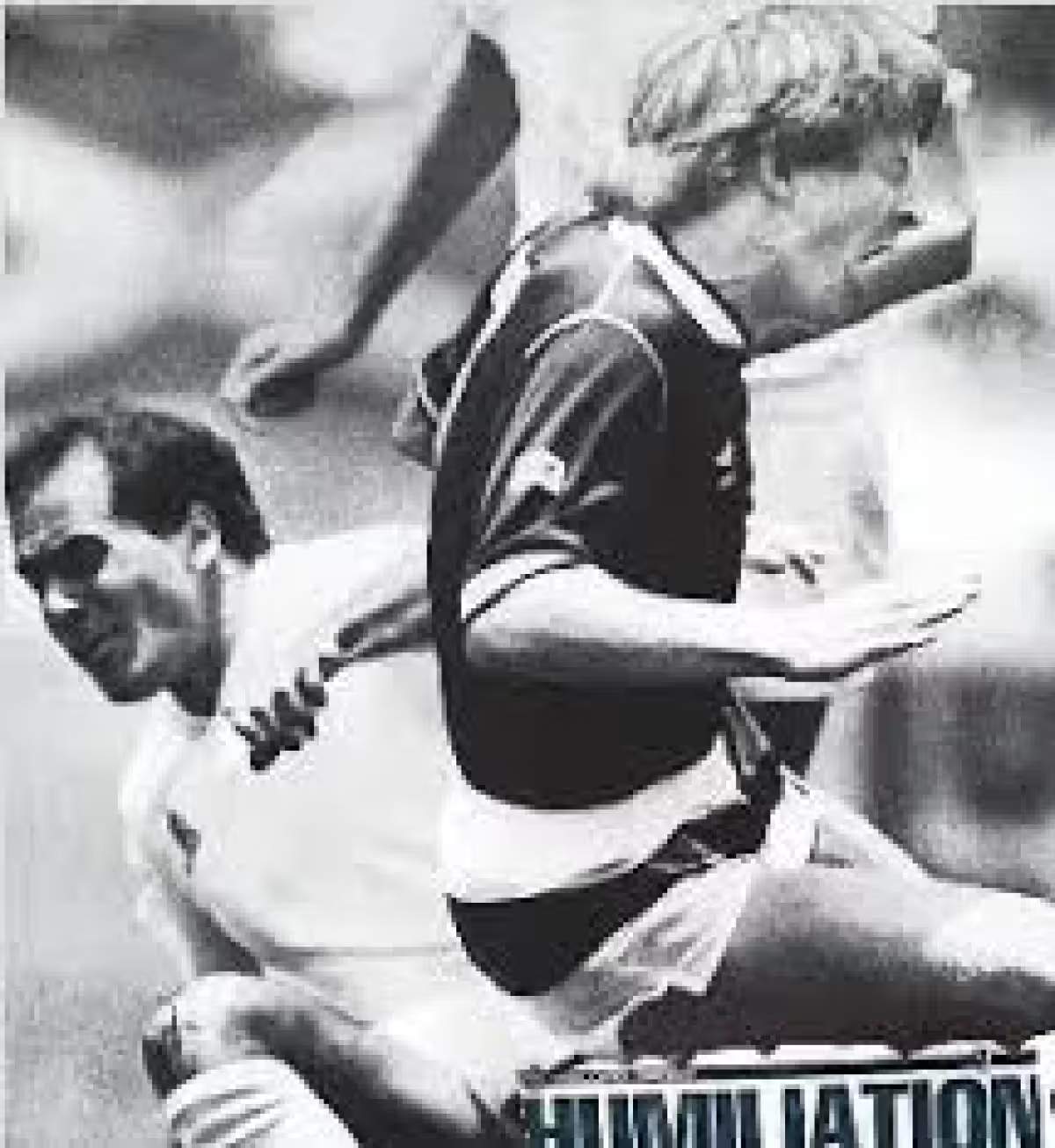
Kapadia said he met Dalglish at a Champions League match when the idea for the film was first floated. He told him he worked in a very particular way and did not have a camera, and the project eventually became an archive-only portrait rather than a conventional sit-down documentary. That choice gives the film a narrow frame, but it also keeps the focus on the public record of a career that helped define an age of British football.
The documentary also lands at a moment when the memory of Hillsborough still shapes how Dalglish is remembered. Kapadia said his own children’s generation has never really understood what happened there, even though the disaster led to years of anger over how newspapers, politicians and authorities tried to blame drunk supporters. For Kapadia, that is part of why Dalglish’s standing endures: he stayed, he backed the community and he refused to turn away.
Kapadia has spent much of his career making documentaries about icons, including Ayrton Senna, Amy Winehouse and Diego Maradona, but he said Dalglish was different because the story is not only about brilliance. It is also about loyalty, loss and the way one man’s response to disaster became part of football’s moral memory. At 75, Dalglish is still a name that carries both the joy of old victories and the weight of what came after them.