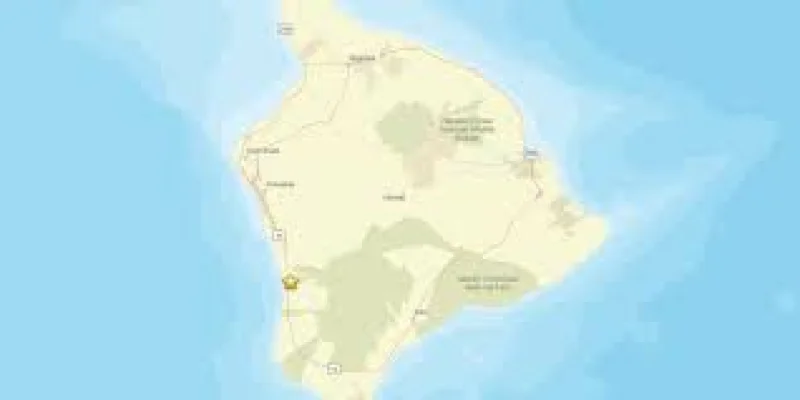
A magnitude 6.0 earthquake struck the western flank of Mauna Loa on Hawaii island at 9:46 p.m. tonight, shaking homes across the island chain and prompting fresh attention to Hawaii’s volcanic fault lines. The Pacific Tsunami Warning Center said the quake did not generate a tsunami.
The quake was centered about 8 miles south of Honaunau-Napoopoo and 22 miles south-southeast of Kailua-Kona at a depth of about 15 miles. The U.S. Geological Survey initially listed the event as magnitude 5.9 before upgrading it to 6.0, a level considered strong. A magnitude 3.2 aftershock followed about six minutes later in the same area.
People reported feeling the shaking on Maui and Oahu, and the USGS “Did you feel it?” survey quickly filled with dozens of responses, including from Lahaina and Mililani. That kind of spread is not unusual when a strong quake hits Hawaii island, where energy can travel far enough to rattle communities well beyond the epicenter. For background on a similar statewide jolt, see Earthquake Hawaii rattles state with strong shaking but no tsunami warning.
For now, the key fact is that the sea did not rise into a tsunami threat, which is the first question many Hawaiians ask after a significant offshore or volcanic-area quake. The more immediate concern is the shaking itself and whether the aftershock sequence continues, especially for people near the southern Kona and Ka‘u side of the island who felt the main event most directly. Tonight’s quake offered that reminder again: even without a tsunami warning, a strong earthquake can still be felt across multiple islands and leave people waiting for the ground to settle.