


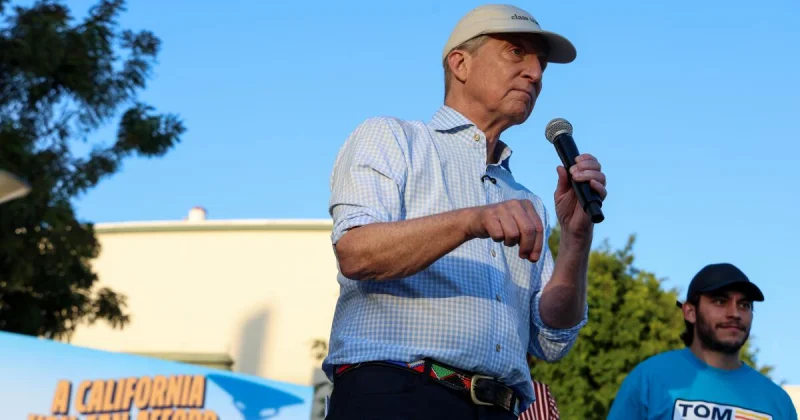
Maggie Reed filed a complaint on Thursday with California’s Fair Political Practices Commission, accusing Tom Steyer’s campaign of paying her to meet with him in March and then failing to tell her what the law required before the arrangement went public. Reed said the meeting led to social media content, including a video she posted and later deleted, and that she signed an agreement that barred her from disclosing the payment.
“In plain terms: The Committee paid for political content, structured it to look like an ordinary creator’s organic opinion, and used a non-disclosure agreement to keep the public from learning the truth,” Reed said in the filing. She said the campaign did not notify her of disclosure requirements as required by law, and she said she was not paid to produce videos expressing support for Xavier Becerra. Reed said those Becerra-supporting videos reflected her genuine support for his campaign.
Steyer’s campaign disclosed in a campaign filing that it paid the agency that represents Reed $5,000 for digital advertising, but the filing did not identify the payment as tied to Reed’s meeting with Steyer or the content that followed. The campaign said it paid to meet with Reed but left the decision of whether to create content entirely up to her. Reed, who has roughly half a million followers on Instagram and TikTok under the username mermaidmamamaggie, said the payment arrangement and the nondisclosure terms meant the public did not know what was happening behind the posts.

The filing landed amid a back-and-forth over paid influencer work in the governor’s race. Two influencers who support Becerra filed a complaint last week saying a number of influencers had created paid content in support of Steyer without disclosing it. Earlier this week, Steyer’s campaign filed a complaint against Reed and Jay Gonzalez, alleging that Gonzalez made several pro-Becerra posts after joining the Becerra campaign and later changed them to include disclosure that they were sponsored.
The Becerra campaign has said it does not otherwise pay influencers to produce content on its behalf. That stance matters because Becerra was leading recent polling by a narrow edge over Steyer and held one of the top two spots in the June 2 primary, which would send the top two finishers to the general election in November. The dispute now reaches beyond a single post or payment and into the rules governing who can speak for a campaign, when the public has to be told, and how much control campaigns have over the influencers they recruit.
For Reed, the complaint turns on the gap between what she says happened in March and what the campaign later told regulators and voters. She said the arrangement was not a simple paid ad buy, but a structure that masked political content as organic support. The Fair Political Practices Commission now has a formal challenge before it, and the answer will help determine whether the fight over influencer transparency in this race is a breach of the rules or just the latest skirmish in a campaign that has already pushed the limits of online persuasion.
