


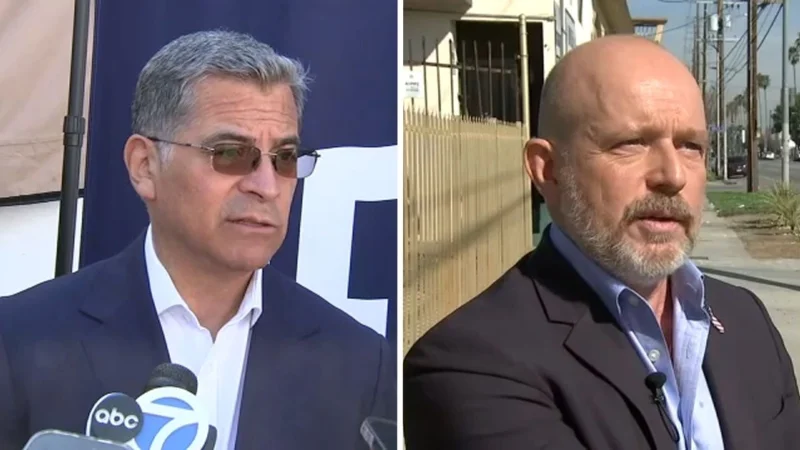
Steve Hilton led a new Democratic Party poll in the California governor’s race on Tuesday with 22 percent, putting the Republican and former commentator ahead of Xavier Becerra, who had 21 percent. Tom Steyer was at 15 percent, Katie Porter at 7 percent, and the crowded field now includes 61 candidates ahead of the June 2 primary.
The poll matters because it points to one of the three outcomes Democrats have been gaming out for months, and the one that now looks most likely: Hilton and Becerra finish first and second and meet again in November. In a state with a lopsided Democratic voter registration advantage, that would appear to favor Becerra on paper. But Hilton’s path is narrower and harsher than a normal governor’s race. His only realistic chance of winning in November would be if his Democratic rival self-destructs.
Hilton, a Republican, has tried to define the race around his opponent before the general election even begins. He said, in effect, that “a vote for Chad Bianco is a vote for two Democrats,” a line meant to warn conservative voters against splitting the field. Democratic operatives, for their part, have been trying to tie Hilton to President Donald Trump, hoping to make the former British-born commentator easier to beat if he makes the final two. That effort matters because California is notorious for taking a long time to produce a final election count, and the top two finishers are not always obvious on election night.

The contest has already produced one reminder of how unpredictable California can be. Two years ago, Democrat Adam Schiff helped Republican Steve Garvey qualify for the November election in a U.S. Senate race, a result that unnerved Democrats who had expected a cleaner matchup. Earlier in this governor’s race, Democrats worried about a 1-2 Republican primary finish. That fear eased after Eric Stalwell’s exit from the race propelled Becerra into contention, although Stalwell’s name remains on the ballot. The shift gave Democrats a more conventional path, but it did not end the danger of an unexpected pairing in November.
Steyer’s role has also made the race more volatile. He has spent millions from his fortune on TV and internet ads attacking Becerra, adding another layer of pressure on the former attorney general even as he tries to consolidate support. The attacks come against the backdrop of a campaign-account scheme involving money from one of Becerra’s campaign accounts, in which three people have pleaded guilty to federal charges. That history has not removed Becerra from the front of the field, but it has given his opponents material to keep pushing.
For now, the numbers suggest the fight is narrowing toward the same question California keeps asking itself: whether the state’s deep Democratic advantage will hold when the ballot is crowded, the count is slow and the top two could be a Republican and a Democrat after all. If Tuesday’s poll is a reliable guide, that is where the race is heading.
