


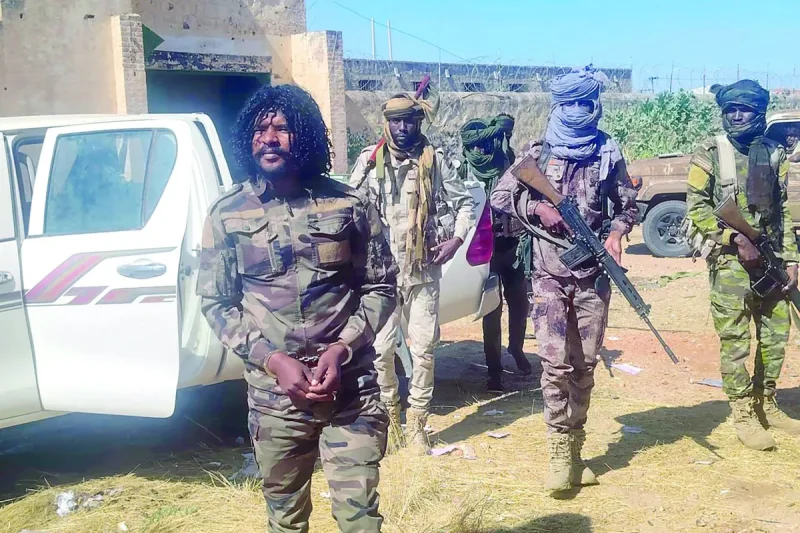
Sudan’s Rapid Support Forces on Tuesday denied reports that Brigadier General al-Fateh Abdullah Idris, known as Abu Lulu, had been released, saying he and several others accused of abuses against civilians in al-Fashir have been detained since their arrest in October. The force said they remain in prison and have never left.
The denial came after reported on Monday that 13 sources said they knew of Abu Lulu’s release, including three RSF commanders, an RSF officer, a relative of Abu Lulu, a Chadian military officer close to RSF command and seven other people with contacts inside the movement or access to intelligence on field operations. The RSF-led coalition government had already rejected the report when asked on Monday, and the force said the allegations were false and part of campaigns of incitement.
Two of the people cited by, a Sudanese intelligence official and an RSF commander, said they personally saw Abu Lulu on the battlefield in Kordofan in March, adding another layer of confusion to a case that has become one of the most closely watched inside the paramilitary movement. RSF officers had also pleaded for him to be returned to the field to lift morale among fighters engulfed in heavy combat there, according to.
Abu Lulu became widely known after videos circulated showing him executing unarmed people during the al-Fashir offensive. The RSF imprisoned him in late October 2025, days after it took over the city, and the force says a special court will try him and others accused of violations during that operation. Ahmed Tugud Lisan said as much in a statement, framing the case as part of an internal legal process rather than a release.
The UN Security Council sanctioned Abu Lulu on February 24 for human rights abuses and described him as “the butcher of al-Fashir.” His case has drawn attention because the Sudanese army and the RSF have spent three years fighting for control of the country and its financial resources, a war aid groups say has created the world’s largest humanitarian crisis. For now, the RSF is trying to hold the line on a figure whose name has become shorthand for the violence in al-Fashir, even as questions about where he has been and who controlled him keep following the group.
