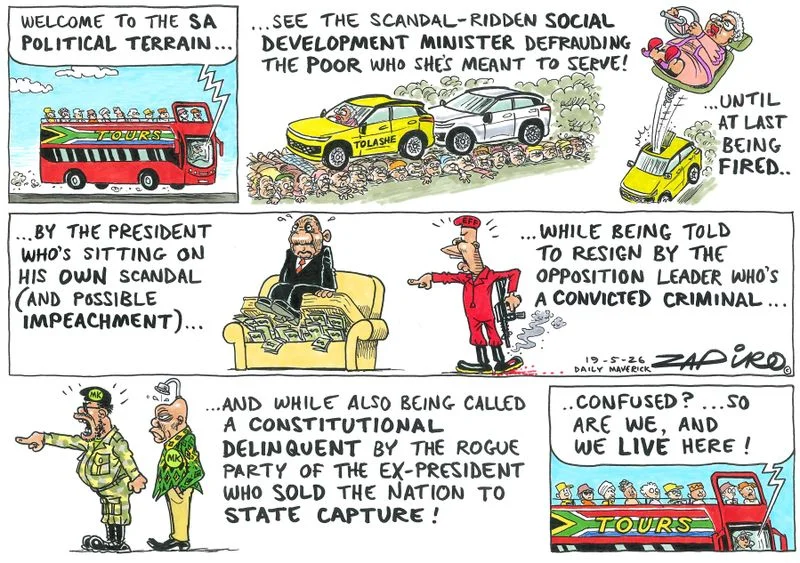
Julius Malema was dragged into a blunt online exchange about corruption and voter loyalty after a remark tied his name to VBS cash. The comment was not a formal statement or a new policy move. It was a sharply worded jab that turned one politician into a symbol of a wider frustration.
"With Malema, you should have had him sitting on the VBS cash while making his comment...." the post said. It added: "Sadly with our politicians there are too many scandals to fit onto the page...."
The same thread then shifted from outrage to resignation, saying politicians "refuse to go becase WE STILL VOTE FOR THEM." That line gives the argument its edge: the problem is not only what leaders are accused of, but the public habit of sending them back anyway. The language is rough and informal, but the message is clear enough. It is not just about one man. It is about a political culture in which scandal has become so common that it can be treated like background noise.
There is no full, dated event behind the comment, and no detailed incident spelled out in the source. What gives it weight is the choice of target. Malema, whose name alone draws attention, is being used to sharpen a broader complaint about politicians and the way they survive controversy. By pairing him with VBS cash, the post reaches for one of the most loaded references in recent South African political debate, without explaining it further. That leaves the criticism hanging in the air: not specific enough to settle anything, but pointed enough to keep the argument alive.
The tension in the exchange is that the anger is aimed at leaders, while the closing line turns the blame back on voters. If people keep voting for the same figures, the post argues, then the scandals are not only theirs. That is the part that matters today. It turns a passing comment about Julius Malema into a wider warning about accountability, and it leaves the real question where it belongs — with the electorate, not the insult.