


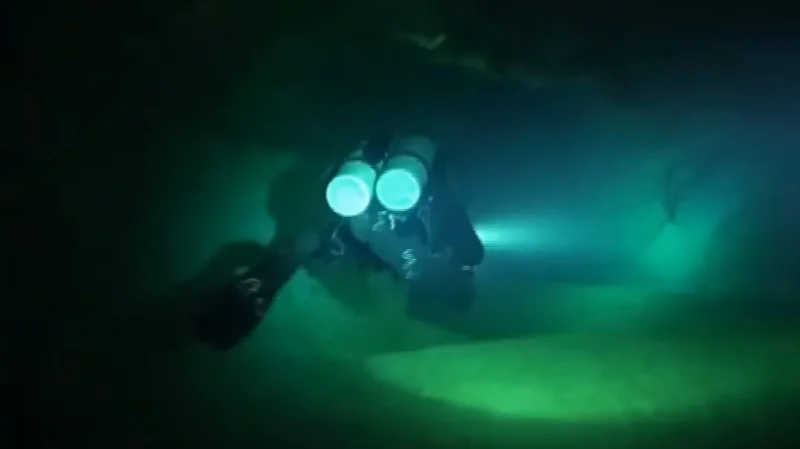
A deadly Maldives scuba diving accident has become one of the country’s most serious dive tragedies, after five Italian nationals died during a deep cave dive in Vaavu Atoll and a Maldivian rescue diver later died during the recovery operation. Authorities in the Maldives and Italy are examining how an experienced group ended up trapped in an underwater cave system far beyond standard recreational limits.
The accident has drawn international scrutiny because the Maldives is one of the world’s best-known diving destinations, and because early accounts suggest the group may have descended to roughly 50 to 60 meters before entering a cave where visibility, current and air supply became critical.
Five Italian Divers Died During A Cave Dive
The victims were part of an Italian diving group that entered a deep underwater cave system near Vaavu Atoll on Thursday, May 14, ET. The group included marine ecologist Monica Montefalcone, her daughter Giorgia Sommacal, researchers Federico Gualtieri and Muriel Oddenino, and diving instructor Gianluca Benedetti.
Benedetti’s body was found first near the cave entrance. Four others remained missing until a specialist recovery team later located them deeper inside the cave system. Their bodies were brought out in stages because of the depth, current, narrow passages and decompression risks involved in the operation.
The incident is being treated as a major maritime and diving safety case, not simply a recreational accident. Officials are reviewing dive planning, depth, equipment, supervision and whether the excursion complied with local diving rules.
Recovery Effort Became Deadly
The search and recovery operation also claimed the life of a Maldivian military diver, raising the death toll to six. The diver suffered a decompression-related emergency during an attempt to recover the missing victims.
That additional death underlined the danger of the site. Deep cave recovery work requires specialist training, redundant breathing systems, careful decompression planning and the ability to navigate in low visibility. In underwater caves, even a short delay or wrong turn can become life-threatening because divers cannot make a direct ascent to the surface.
After local efforts were halted, a highly experienced Finnish technical diving team helped locate and recover the remaining bodies. Their work involved advanced equipment, including rebreathers and propulsion devices, to reach parts of the cave that were too dangerous for ordinary recovery dives.
Investigators Examine How The Dive Went Wrong
The central question is why the group entered a cave at a depth believed to be well beyond the Maldives’ standard recreational diving limit of about 30 meters. Early information suggests the divers may have been around 50 to 60 meters down, where air consumption increases quickly and nitrogen narcosis can impair judgment.

Several possible factors are under review. Strong currents may have complicated the dive. Poor visibility inside the cave may have made orientation difficult. Investigators are also examining whether a visual illusion inside the cave caused the divers to mistake a sandy formation or passage for a safe route, leaving them deeper inside the system than intended.
Another theory involves water movement near the cave entrance, where current dynamics can pull divers into confined areas. None of these possibilities has been confirmed as the single cause. Dive computers, recovered cameras and autopsy findings are expected to help reconstruct the final minutes.
Why Cave Diving Is Different From Open-Water Diving
The Maldives is famous for clear water, reefs, sharks and drift dives, but cave diving is a separate discipline with much higher risk. In open water, a diver with an emergency may be able to ascend. In a cave, rock overhead blocks a direct route to the surface.
Depth adds another layer of danger. At 50 meters or more, divers breathe through gas far faster than they do in shallow water. Standard scuba tanks can be depleted quickly, especially if a diver is stressed, fighting current or trying to help another person.
Cave divers normally use specialized training and equipment, including guideline reels, redundant gas supplies, lights, backup lights and carefully calculated exit reserves. The known details of the Maldives accident suggest investigators will focus closely on whether the dive plan matched the conditions and depth.
Maldives Tourism Faces New Safety Scrutiny
The Maldives depends heavily on tourism, and diving is a major part of its global appeal. Most tourist dives in the country are conducted safely, but high-profile fatalities can raise urgent questions about enforcement, operator standards and whether visitors fully understand the limits of their training.
This case is especially sensitive because the group included experienced divers and researchers, not first-time tourists. Experience can reduce risk, but it does not remove the need for technical preparation when depth, caves and strong currents are involved.
Authorities are likely to face questions about who approved the dive, what briefing was given, what equipment was used and whether the site should have been treated as a technical cave environment rather than a recreational excursion.
Autopsies And Footage May Clarify The Timeline
The investigation is still developing. Autopsies are expected to provide information on drowning, decompression injury, gas supply and any medical factors that may have contributed. Recovered camera footage may show the group’s route, visibility and behavior inside the cave.
For now, the confirmed picture is stark: five Italian divers entered a deep cave system in the Maldives and did not return, and one rescue diver died during the attempt to recover them. The final findings will matter beyond this single tragedy, because they could shape how the Maldives regulates deep and overhead-environment dives in one of the world’s busiest marine tourism markets.
