


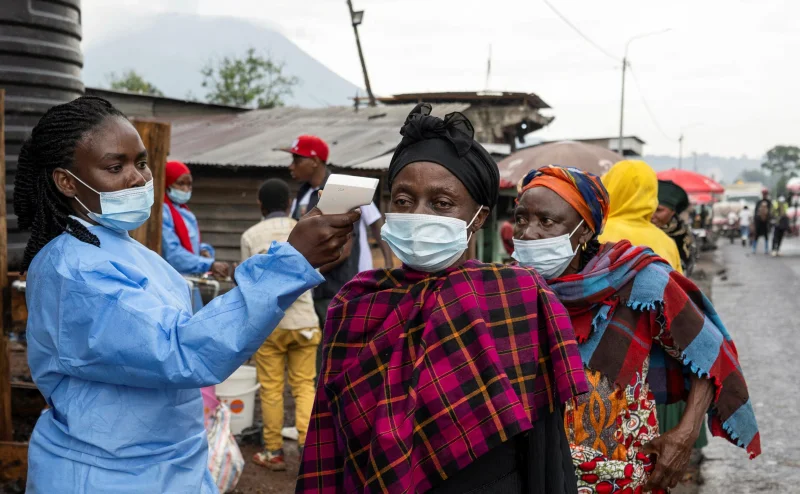
A fast-moving Ebola outbreak linked to the Bundibugyo virus has expanded across parts of the Democratic Republic of the Congo and Uganda, prompting emergency health measures, traveler screening and renewed concern over a strain for which no approved vaccine or specific treatment exists. Health authorities have identified hundreds of suspected infections and more than 100 deaths, with the outbreak centered in northeastern Congo and connected cases across the Ugandan border.
What Is Ebola Virus Disease?
Ebola is a severe viral illness that can cause fever, vomiting, weakness, body pain, diarrhea and, in some patients, internal or external bleeding. It belongs to a group of diseases known as viral hemorrhagic fevers, though bleeding is not present in every case.
The current emergency involves Bundibugyo virus, one of the Ebola-related viruses known to cause serious disease in humans. It is different from the Zaire Ebola virus, the strain behind the devastating 2014-2016 West Africa epidemic and the strain for which approved vaccines and treatments have been developed.
That difference matters. The Bundibugyo strain has caused far fewer known outbreaks, leaving fewer medical tools immediately available. Past Bundibugyo outbreaks have had case fatality rates roughly in the 30% to 50% range, while Ebola disease overall has varied widely by outbreak, health-system capacity and speed of care.
How the Ebola Outbreak 2026 Expanded
The 2026 outbreak was formally declared in Congo in mid-May after laboratory testing confirmed Bundibugyo virus in samples from suspected cases. Early known illness was traced to clusters in Ituri Province, including health zones around Bunia, Rwampara and Mongbwalu. One of the first known suspected patients was a health worker who developed symptoms in late April and later died.
By May 20, health agencies were describing a broader event, with suspected cases rising from the hundreds to more than 500 in a matter of days. Death counts also climbed sharply, though some numbers remained categorized as suspected while field teams worked to confirm infections, link cases and identify transmission chains.
The outbreak has reached a difficult part of central Africa for emergency response. Ituri has faced insecurity, displacement and disruption to health services, making surveillance, safe burials, contact tracing and patient isolation harder to carry out quickly. A case in North Kivu, including concern around Goma, raised additional alarm because urban transmission can make containment more complicated.
Ebola Symptoms and Why Early Detection Is Difficult
Early Ebola symptoms can look like many other infections common in the region. Fever, weakness, headache, muscle pain, vomiting and diarrhea may be mistaken at first for malaria, typhoid, cholera or other illnesses. That overlap can delay isolation and testing, especially when patients first seek care in small clinics or informal settings.
Severe cases can progress quickly. Some patients develop dehydration, shock, organ failure or bleeding. Rapid supportive care can improve survival, especially when patients receive fluids, electrolyte correction, oxygen when needed and treatment for complications.

The incubation period is generally up to 21 days, which is why health officials monitor contacts and potentially exposed travelers for three weeks. A person is not considered contagious before symptoms begin, but once illness starts, contact with blood, vomit, stool, urine, saliva, sweat, breast milk, semen or other body fluids can transmit the virus.
How Does Ebola Spread?
Ebola spreads through direct contact with the bodily fluids of an infected person who has symptoms or has died from the disease. It can also spread through contaminated bedding, clothing, needles, medical equipment or surfaces that carry infectious fluids.
Funerals can become high-risk events when mourners touch or wash the body of someone who died from Ebola. Health teams often focus on safe and dignified burials because bodies can remain highly infectious after death.
The virus is not spread through casual airborne exposure in the way measles or influenza can be. Still, health-care settings are vulnerable when workers lack protective equipment or when patients are not recognized as potential Ebola cases. Several past outbreaks have grown after infections among health workers, caregivers and family members.
What Travelers Need to Know
The risk to travelers outside the affected region remains low, but authorities have tightened monitoring because Ebola’s incubation period can allow an infected person to travel before symptoms appear. U.S. officials have advised against nonessential travel to affected provinces in Congo and have added enhanced screening and monitoring for some travelers arriving from areas linked to the outbreak.
Travelers in or near affected areas should avoid contact with sick people, bodies of people who died after unexplained illness, health facilities treating Ebola patients unless seeking urgent care, and items that may be contaminated with bodily fluids. Anyone who develops fever, vomiting, diarrhea, unexplained bleeding or severe weakness within 21 days of possible exposure should isolate and seek medical guidance immediately before entering a clinic or hospital.
Border communities in Congo and Uganda are especially important because families, traders and workers often move across frontiers. Screening can help, but it does not replace local case finding, isolation and contact tracing.
Why Bundibugyo Virus Raises Extra Concern
The current outbreak is especially challenging because there is no approved vaccine or specific antiviral treatment for Bundibugyo virus disease. Candidate vaccines are under discussion, but they are not yet available for a mass campaign. That leaves classic outbreak control measures as the main defense: rapid detection, isolation, contact tracing, safe burials, infection-control training and public communication.
The mortality rate will become clearer as more cases are confirmed and patient outcomes are tracked. Early suspected fatality numbers can look unusually high when severe cases are detected first and milder or earlier-stage infections have not yet been counted.
For now, the central question is whether response teams can cut transmission faster than the virus spreads through households, clinics and cross-border networks. The next several weeks will be critical for determining whether the 2026 Ebola outbreak remains concentrated in known hot spots or becomes a wider regional emergency.
