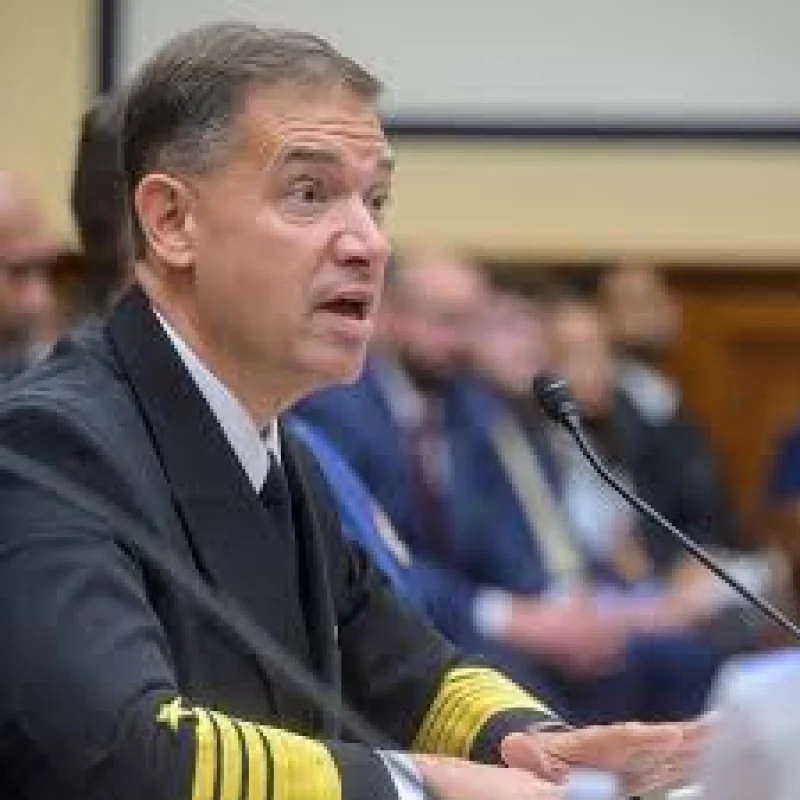
Adm. Brad Cooper sharply rebuked Democratic Rep. Seth Moulton on Tuesday during a House Armed Services Committee hearing after the Marine Corps Iraq War veteran asked how many more Americans would die because of what he called a failed Iran strategy. Cooper replied, “I think it’s an entirely inappropriate statement from you, sir,” and Moulton shot back, “It’s not a statement, it’s a question.”
The exchange turned a routine oversight hearing into a confrontation over the widening consequences of the conflict, with Moulton pressing Cooper on instability in the Strait of Hormuz, rising oil prices and reports that Iran had rebuilt parts of its missile infrastructure. Moulton said, “It doesn’t seem to be going well,” and added that he wanted to know “how many more Americans we have to ask to die for this mistake.”
Cooper pushed back on that picture, calling reports that Iran had reconstituted key missile sites “inaccurate” and saying U.S. forces had achieved their assigned military objectives. The hearing came as the United States continued to observe a ceasefire that has been in place since April 7, leaving lawmakers to argue over whether the administration’s approach has actually reduced the risk of a wider war or simply paused it.

The backdrop to the clash is a fast-moving sequence that began on Feb. 28, when the U.S. launched Operation Epic Fury, and the human cost attached to it has become a central point of political pressure. Fourteen U.S. service members have died in combat since then, a figure that hung over the hearing as Moulton, a frequent critic of the Trump administration’s Iran strategy, kept returning to the same question: what happens if the United States keeps extending a military posture that he argues has already failed?
Trump added another layer of uncertainty on Monday, saying he directed the military to pause planned operations against Iran for Tuesday at the request of Gulf allies. He wrote on Truth Social that serious negotiations were taking place and said, “This Deal will include, importantly, NO NUCLEAR WEAPONS FOR IRAN!” The result is a policy split that played out in public on Capitol Hill: the White House signaling diplomacy and restraint, while one of the administration’s top military figures defended the mission and a lawmaker demanded to know whether the cost is about to rise again.
For now, the ceasefire has held and the administration is trying to frame the pause as leverage rather than retreat. But Tuesday’s exchange showed how fragile that argument is when the question is no longer whether the conflict is contained, but whether the next decision brings the country closer to an agreement or back toward another round of war.