


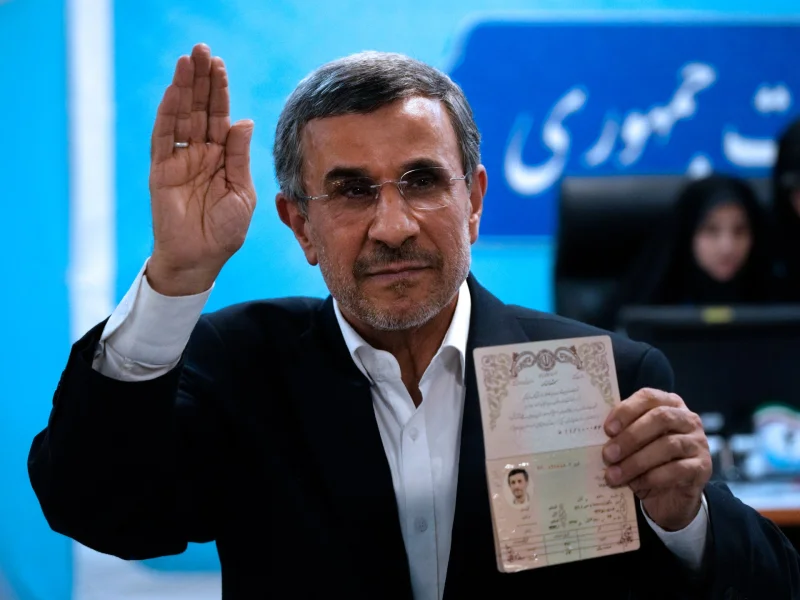
Israel reportedly wanted to put Mahmoud Ahmadinejad in power, and one plan discussed in that context would have involved bombing a security building near his Tehran home to help him escape house arrest.
The claim, reported by a major U.S. newspaper, landed alongside a far stranger detail: Iranian media said Ahmadinejad had not been under house arrest at all. Even so, the report has pulled one of Iran’s best-known former presidents back into a shadow war over airstrikes, assassinations and regime change.
Ahmadinejad, who served as Iran’s president from 2005 to 2013, later remade himself as a critic of the system and a champion of the poor after falling out with Ali Khamenei. During his presidency, he was also known for incendiary attacks on Israel, a record that made him a tempting figure for outside powers looking for leverage over Tehran.

The episode took on a grim edge on 28 February, when Iranian media initially reported that Ahmadinejad had been killed in a strike on his home during the first Israeli attacks on Tehran. A security outpost outside his home in Narmak, in north-east Tehran, was hit, and satellite images later confirmed that the outpost had indeed been struck.
Official news agencies then said Ahmadinejad had survived with minor injuries and that his bodyguards were killed. Those details deepened the confusion around a story that many observers quickly dismissed as implausible, or as disinformation spread by Ahmadinejad’s supporters or by Israeli intelligence services.
That skepticism matters because the reported plan sits at the edge of what air power can actually deliver. The idea that bombing a building near Ahmadinejad’s home could somehow trigger a political collapse in Tehran now looks less like a working strategy than a sign of overreach. It suggests that the United States and Israel may have overestimated both the depth of opposition to the regime and their own ability to bring it down from the air.
What remains unresolved is not whether the account stirred attention — it did — but whether it was ever more than an exercise in psychological warfare. If the goal was to unsettle Tehran, it worked. If the goal was to change the course of power in Iran, the reported plan did not come close.
