


The idea of bridges, tunnels and other fixed links for the northern isles is heading back into the spotlight on May 20, when Heather Woodbridge is set to give evidence to the UK Government’s Scottish Affairs Committee.
Woodbridge, the leader of Orkney Islands Council, will speak as the committee examines which communities, if any, could benefit from connections such as bridges and tunnels, and what role the UK Government might have in supporting them. The hearing comes after some locals already wrote to the inquiry in support of fixed links, reviving proposals that had been discussed years earlier and then pushed back into the background.
The inquiry itself was first announced in October last year, and the written evidence has already brought old ideas back into circulation. In Orkney, two studies have again become part of the debate. A 2021 report explored a connection between Rousay and Egilsay and put the cost at £26.6 million, with estimates potentially rising to £40 million. A separate 2022 study looked at a bridge network joining Eday, Faray and Westray, with a price tag of between £175 million and £200 million.
Those figures matter because they show how sharply the scale changes depending on the route. They also help explain why the issue has never settled into a simple yes or no. The islands are not all asking for the same thing, and the costs of moving away from ferries vary widely from one proposal to the next.
Orkney Islands Council has been focused on replacing its ageing ferry network, while Shetland Islands Council continues to investigate tunnels. But the written evidence to the committee has revived discussion of earlier Orkney proposals, including the Rousay-Egilsay link and the Eday-Faray-Westray network. The Highlands and Islands Transport Partnership has argued for what it calls targeted fixed links where they can ease pressure on ferry services, deliver transformational benefits and win community backing, citing Rousay and Egilsay as one example.
There is, however, a complication inside Orkney’s own record. Last year, it emerged that the council’s marine services department had spent almost £20,000 on early-stage fixed link studies without informing councillors or senior officials. That revelation sits awkwardly beside the broader public discussion now being encouraged by the inquiry, because it shows that the topic has been advancing in some corners long before it reached the committee room.
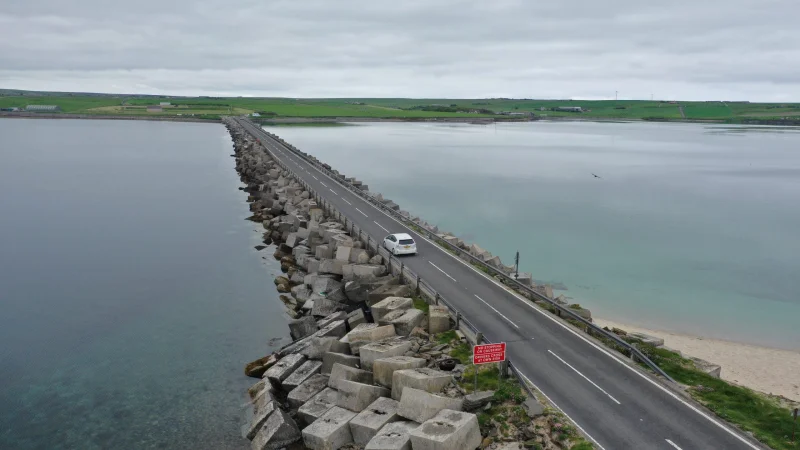
Neil Kermode, a chartered civil engineer who has studied the history and impact of the Churchill Barriers for over 30 years, says Burray and South Ronaldsay are the two notable exceptions to the population decline seen across Orkney’s outer isles. He has also detailed the different effects a link between Eday and Westray, via Faray, could have on the islands around it.
Kermode says low bridges are “generally an under-considered option” and argues that they do not have to be grandiose to make a difference. “Such structures do not need to be grandiose but could provide interconnection comparatively cheaply,” he says. He also describes a role for tidal energy devices if they were built into fixed links such as bridges or causeways, suggesting the question is not only whether islands can be connected, but what else those connections might do once they exist.
The hearing will now test how far that thinking has moved from theory toward policy. For Orkney, and for Shetland, the issue is no longer just whether fixed links are imaginable. It is whether Westminster is willing to say which ones could genuinely work, and who would pay to make them real.
