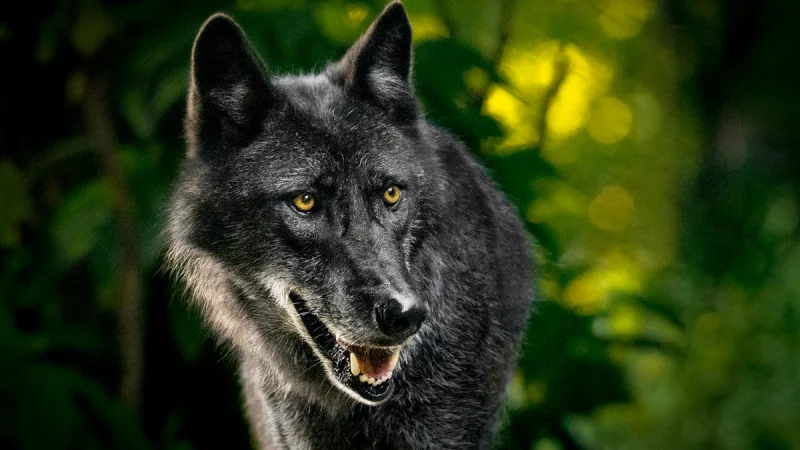
A gray wolf has been detected in Sequoia National Park for the first time in more than 100 years, according to wildlife trackers monitoring a collared female that has crossed much of California. Susan Dewar said the animal’s satellite signature entered the park on Sunday, May 17, and was still inside the park on May 18.
The wolf is listed on the map as Yowlumni Disperser, a reference to the path she has taken since leaving her natal range. California Wolf Watch said the collared female, BEY03F, traveled hundreds of miles across the state in recent months, including a run that took her to Los Angeles County earlier in 2025 before she turned back north through Kern and Tulare counties.
That long movement has put her in places where wolves had been gone for generations. John Marchwick, editor of California Wolf Watch, wrote on April 6 that BEY03F was officially the first known wolf in Inyo County since wolves were extirpated from California in 1924. Gray wolves were wiped out in California in the 1920s and only began returning on their own in 2011 from other western states.
BEY03F’s route has been one of the state’s most closely watched wolf movements this year. Born in 2023 as part of the Beyem Seyo Pack in Northern California, she traveled roughly 370 miles south of her natal pack in Plumas County in 2025. State wildlife officials captured and collared her in May 2025 within the Yowlumni Pack’s territory, giving trackers the satellite signal now showing her inside the national park.
Her presence matters because gray wolves are now listed as a protected, endangered species under state and federal law, a status that reflects both their absence from California for decades and the difficulties of their return. Dewar said the map shows that she is still in the national park today, and added that the animal is likely exploring new territory and/or seeking a mate.
But the wolf’s journey also sits against a harder history. Dewar said the species disappeared from the state not because of natural causes, but because of widespread, systematic persecution driven by human activity. The fact that a wolf is now being tracked inside Sequoia National Park does not erase that loss; it shows how far the species has come back, and how fragile that comeback remains.
For now, the question is not whether wolves can reach the park. BEY03F already has. The issue is whether California can absorb a returning predator after a century away and still protect the animal that made the journey.