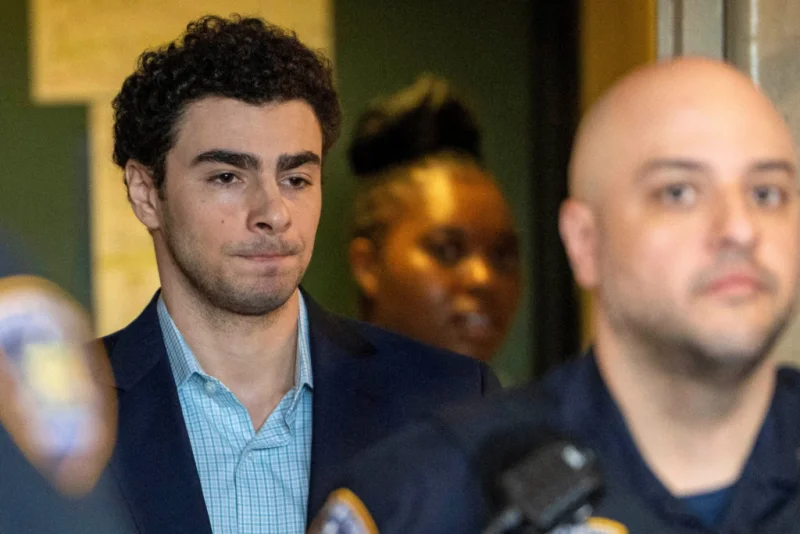
A New York judge has allowed prosecutors to use a gun and notebook as evidence in Luigi Mangione’s upcoming state murder trial, a major pretrial ruling in the killing of UnitedHealthcare CEO Brian Thompson. The decision gives the Manhattan case a clearer path toward trial while also handing the defense a partial victory by excluding other items taken during Mangione’s arrest.
Judge Allows Gun And Notebook In State Trial
The ruling, issued Monday, May 18, centers on evidence found after Mangione’s arrest in Altoona, Pennsylvania, five days after Thompson was shot outside a Midtown Manhattan hotel in December 2024. Prosecutors say a 3D-printed handgun and a notebook recovered from Mangione’s backpack help connect him to the killing and show planning, motive and intent.
The defense argued that the search of the backpack was unlawful and that the evidence should be kept out of court. The judge drew a distinction between the initial warrantless search at the arrest location and a later inventory process at a police station. The gun and notebook were allowed because the court found the later handling legally permissible.
That decision is significant because the notebook is expected to be one of the prosecution’s most important pieces of evidence. Prosecutors have described writings that appear to discuss targeting a health insurance executive, language they are likely to frame as evidence of premeditation. Mangione has pleaded not guilty, and the allegations remain unproven unless a jury convicts him.
Defense Wins Partial Suppression Ruling
The ruling was not a complete loss for Mangione’s lawyers. The judge barred prosecutors from using several other items seized during the earlier search, including a cellphone, passport, computer chip and gun magazine. The court also excluded certain statements Mangione made before he was advised of his rights.
That partial suppression gives the defense room to argue that police mishandled parts of the arrest and evidence-gathering process. It may also limit the prosecution’s ability to use digital material or travel documents to build a broader timeline around Mangione’s movements.
Still, the ruling leaves the core physical evidence intact. For prosecutors, keeping the gun and notebook in the case is a major advantage. For the defense, the challenge now becomes attacking how that evidence is interpreted, whether it reliably proves intent and whether the state can connect it beyond a reasonable doubt to Thompson’s killing.
Brian Thompson Killing Remains A High-Profile Case
Thompson was fatally shot on December 4, 2024, outside a Manhattan hotel before a planned investor event. His death drew national attention because of his role leading UnitedHealthcare, one of the largest health insurance companies in the United States, and because the killing quickly became entangled with public anger over the health care system.
Investigators have described the shooting as a targeted attack rather than a random act of violence. Surveillance footage, travel records, physical evidence and writings attributed to Mangione are expected to form the backbone of the state’s case.

The public reaction has added another layer of complexity. While many officials condemned the killing, some online communities treated Mangione as a symbol of rage toward insurers and medical billing practices. The courtroom, however, will focus on criminal liability, not the wider political debate over health care.
State Trial Is Set For September
Mangione’s state trial is scheduled to begin on September 8 in Manhattan and is expected to last several weeks. He faces charges including second-degree murder, weapons offenses and other felony counts tied to the shooting and his alleged possession of false identification.
A separate terrorism-related charge in the state case was dismissed earlier, narrowing the prosecution but leaving the central murder case in place. If convicted on the most serious remaining state counts, Mangione could face life in prison.
The September trial will likely turn on three major questions: whether prosecutors can prove Mangione was the shooter, whether the killing was intentional and premeditated, and how jurors interpret the writings and physical evidence now allowed into court.
Federal Case Adds Another Legal Track
Mangione also faces a separate federal case tied to Thompson’s killing. That prosecution has included allegations involving stalking and the use of a firearm, creating a parallel legal process distinct from the New York state murder case.
The federal timeline has shifted repeatedly as judges and lawyers manage the complexity of overlapping prosecutions. The federal trial is now expected after the state case, with proceedings pushed into 2027. That delay gives both sides more time to prepare while allowing the state trial to move first.
The death penalty has been a major issue in the federal case, but recent rulings have limited that possibility. Even without a capital sentence, the federal charges could still carry severe prison exposure if Mangione is convicted.
Evidence Fight Shapes The Road Ahead
The latest ruling does not decide Mangione’s guilt or innocence. It determines what jurors may hear and see when the state trial begins. That distinction is crucial in a case where public attention has often moved faster than the court record.
For prosecutors, the decision preserves two pieces of evidence they are likely to present as central to motive and planning. For the defense, the suppression of other materials provides an opening to question police conduct and challenge the strength of the investigation.
The next phase will be jury selection, trial preparation and renewed arguments over how evidence can be presented in court. When the case reaches trial in September, the focus will shift from public reaction to a narrower legal question: whether the state can prove beyond a reasonable doubt that Luigi Mangione murdered Brian Thompson outside a Manhattan hotel.