


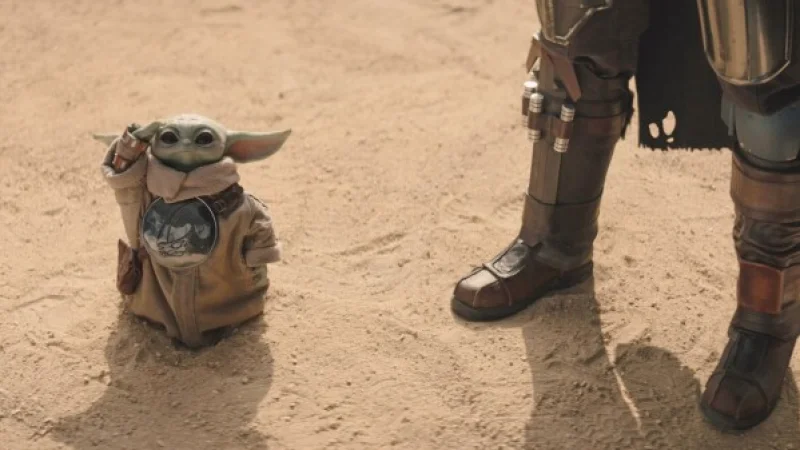
The Mandalorian and Grogu is bringing Star Wars back to cinemas this week, turning one of the franchise’s most popular streaming-era stories into its first theatrical release in seven years. Directed by Jon Favreau and led by Pedro Pascal’s Din Djarin and the Force-sensitive Grogu, the film arrives with major expectations, a high-profile cast and a central question for Lucasfilm: can a Disney+ success become a big-screen event?
Star Wars Returns To Theaters With Mando And Grogu
The new film opens in Australia on May 21 and in the U.S. and U.K. on May 22, placing it at the front of the summer movie season. Its release marks the first new Star Wars feature in theaters since The Rise of Skywalker in 2019, ending a long big-screen pause for a franchise that spent recent years expanding mostly through streaming series.
The story continues the post-Return of the Jedi timeline established in The Mandalorian. The Empire has fallen, but Imperial warlords remain active across the galaxy as the New Republic tries to stabilize the fragile peace that followed the Rebellion’s victory. Din Djarin and Grogu are pulled into that unstable landscape, with the film leaning on their bounty-hunter dynamic, surrogate father-son bond and growing place in the wider galaxy.
That setup gives Lucasfilm a more focused route back to theaters. Rather than launching with a brand-new set of heroes, the studio is betting on characters who already have a broad fan base and a clear emotional hook.
Jon Favreau Moves The Disney+ Hit Onto A Bigger Canvas
Jon Favreau directed, co-wrote and produced the film, extending his central role in shaping the modern Mandalorian corner of Star Wars. He wrote the movie with Dave Filoni and Noah Kloor, while Kathleen Kennedy, Filoni and Ian Bryce are among the producers. Ludwig Göransson returns to compose the music, maintaining one of the most recognizable creative signatures from the series.
Favreau’s challenge is not simply scale. The Mandalorian worked because its episodic structure mixed Western-style missions, quiet character beats and compact adventures. A theatrical film requires a different rhythm, with higher stakes, bigger set pieces and a story that can satisfy viewers who may not remember every detail from the show.
Early reactions suggest the movie is deliberately built to be accessible. Reviews have described it as a largely self-contained adventure that uses familiar Star Wars imagery without requiring deep lore knowledge. That approach may help casual audiences, though it also risks frustrating fans hoping for a major mythology-shifting chapter.
Mandalorian Cast Adds Sigourney Weaver And Jeremy Allen White
Pedro Pascal returns as Din Djarin, the helmeted bounty hunter whose guarded style has defined the character since the series began. Grogu remains the emotional center of the story, continuing his evolution from mysterious childlike companion to young apprentice with Force abilities and an increasingly active role in the action.
The expanded cast includes Sigourney Weaver as Ward, a New Republic figure tied to the mission that sends Mando and Grogu into danger. Jeremy Allen White voices Rotta the Hutt, Jabba the Hutt’s son, whose presence connects the film to the criminal underworld and the long shadow of the Hutt clan.

Jonathan Coyne appears as an Imperial warlord, giving the movie a direct antagonist rooted in the fractured remains of the Empire. The cast also includes a surprise voice cameo from Martin Scorsese as a colorful vendor, a detail that has quickly become one of the film’s most discussed curiosities before wide release.
The Story Blends New Republic Politics With Hutt Trouble
The plot places Din Djarin and Grogu in the uneasy aftermath of galactic regime change. The New Republic is trying to protect what the Rebellion fought for, but it lacks full control over the galaxy. That leaves room for warlords, mercenaries and crime families to keep shaping local conflicts.
The mission involving Rotta the Hutt gives the movie a bridge between old and new Star Wars. The Hutts evoke the franchise’s original criminal underworld, while the New Republic angle ties the story to the political instability that defines this era. For audiences who followed The Mandalorian, the premise also continues Din Djarin’s gradual shift from lone bounty hunter to someone operating with broader responsibility.
Set pieces highlighted in early coverage include space battles, hostile terrain, gladiator-style conflict and creature-heavy action. The movie appears designed to offer the visual scale expected from a theatrical Star Wars release while keeping the core relationship between Mando and Grogu at the center.
Early Reviews Point To A Divided Reception
Initial reviews have been mixed rather than unanimous. Some critics have praised the film as a lively, accessible Star Wars adventure that restores the franchise’s big-screen energy without drowning viewers in lore. Others have argued that the movie feels stretched from a streaming premise, with spectacle that does not always translate into emotional weight.
That split is important because the film carries more than ordinary franchise expectations. It is a test of whether Lucasfilm can turn streaming popularity into theatrical momentum after several years of uneven audience response to Star Wars projects. A strong box-office result could encourage more film projects built from Disney+ characters. A softer result would raise harder questions about how much the brand’s streaming audience overlaps with moviegoing demand.
The timing also matters. With family audiences, longtime fans and younger viewers all in play, the movie has a clear commercial lane. Grogu remains one of the most marketable characters introduced in the Disney era, and the film’s release gives Lucasfilm a chance to reconnect that popularity with theaters.
A Big-Screen Test For The Future Of The Mandalorian
The Mandalorian and Grogu arrives as both a continuation and a reset. It gives fans the next chapter for Din Djarin and Grogu, while also serving as a public measure of where Star Wars stands as a movie franchise in 2026.
The key question is whether viewers see this as an essential theatrical event or a larger episode of a familiar show. Favreau’s film appears to answer by emphasizing scale, recognizable characters and a straightforward adventure rather than a dense saga installment.
For Lucasfilm, the stakes are clear. If Mando and Grogu can bring audiences back to theaters, the film may help define the next phase of Star Wars storytelling. If the response remains divided, the studio will still have a popular duo at its center, but the path from streaming success to cinematic revival will look more complicated.
