


Steve Peters took on one of hockey’s pricklier penalty-kill debates and came down on the side of staying put. On Daily Faceoff Live, he said a player with a broken stick should usually defend from where he is rather than gamble on a long trip to the bench, especially in the second period.
Peters said the risk of leaving the zone for a new stick can be too high when a penalty killer is already stretched thin. He said a forward should only go if he can reach the bench in two or three seconds, and even then the answer changes by period. “It depends. And I know that’s not the answer people want to hear,” Peters said, before adding: “You can’t do it in the second period.”
That debate has simmered in hockey for years: whether a broken stick leaves a penalty killer useless enough to justify the dash, or whether those five or so seconds spent chasing equipment can cost more than they save. Peters leaned toward caution. He said a player cannot leave the zone to try to get all the way on that long change to grab a stick in the second period, and he noted that most penalty kill coaches would tell players to stay and defend.
He also pushed back on the idea that a player without a stick is helpless. “The body in the lane helps a couple of things,” Peters said, explaining that a penalty killer can still block shots and make life harder for the power play. But he drew a line at trying to do everything without equipment. “I think you can’t defend without a stick,” he said.
For Peters, the calculation changes in the first and third periods, when some of those boxes are inside the blue line and the trip back can take about two seconds. Even then, he said he is siding with the people who work the penalty kill for a living and prefer structure over improvisation. “I don’t like it for a forward to leave for that long in the second period,” he said. “You got to stay unless you’re a forward that can make it to the bench in just two or three seconds.”
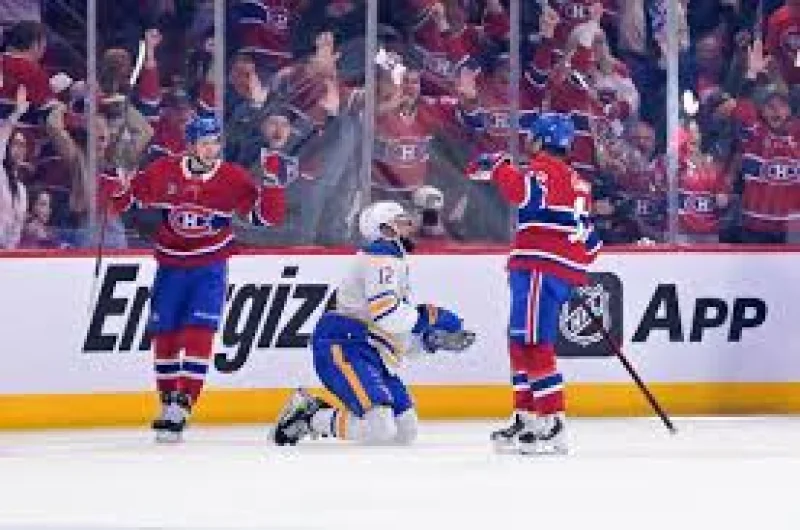
He pointed to a recent example to make the case. Peters said Jordan Greenway got beat by Hutson on the play that led to the Caufield goal without a stick, and he said Greenway had no chance on that sequence. The point was not to single out one player, but to show how quickly a broken-stick gamble can turn into a dangerous odd-man moment.
The broader issue is one every penalty-kill coach has to answer in real time: when a stick breaks, is the safest play to chase a replacement or to survive the next few seconds with body position and hope? Peters made clear where he stands. In his view, unless the bench is close enough to reach almost immediately, the smarter play is to hold the line and keep defending.
