


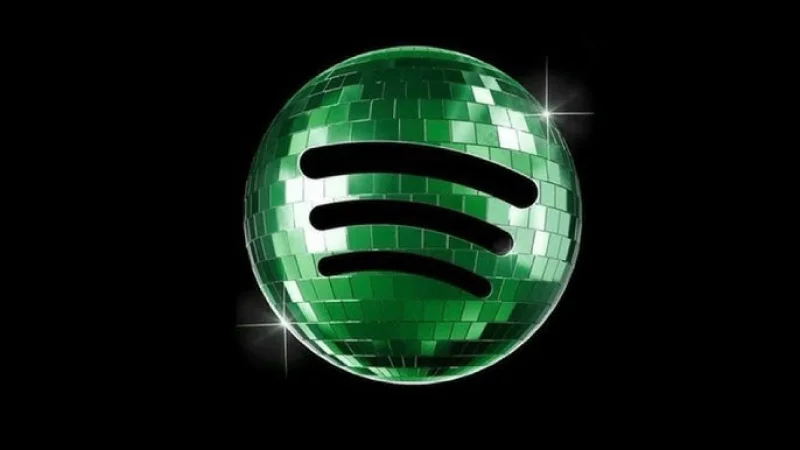
Spotify’s familiar green app icon has taken on a glittering new look, with a disco ball version of the logo appearing on mobile devices as part of the streaming platform’s 20th anniversary campaign. The temporary change has drawn immediate attention from users who noticed the redesigned icon alongside a new personalized feature built around listeners’ all-time streaming history.
Why Spotify Changed Its Logo
The new Spotify logo is not a permanent rebrand. The company introduced the disco ball icon as part of “Spotify 20: Your Party of the Year(s),” a limited-time anniversary experience tied to the platform’s two decades in operation.
The design keeps the recognizable Spotify mark but places it inside a reflective green disco ball, leaning into a party theme meant to connect music, nostalgia and personal listening history. The change began appearing on mobile apps after the anniversary campaign launched on May 12, 2026.
For users wondering why Spotify is a disco ball, the answer is straightforward: the icon is a celebratory visual for the 20-year milestone, not a full replacement for the brand’s standard green-and-black logo.
The Reaction Was Fast And Divided
The new app icon quickly became a talking point because Spotify rarely changes one of the most recognizable logos in streaming. Many users opened their phones expecting the standard green circle and instead found the shinier disco ball treatment, prompting confusion, jokes and criticism across social platforms.
Some listeners called the design playful and fitting for a music celebration. Others argued it looked too busy, dated or less polished than the regular icon. The strength of the response shows how closely users associate app icons with daily habits, especially for a service that sits on millions of home screens.
The backlash also reflects a broader tension in tech design. Even temporary visual changes can feel disruptive when they affect widely used apps. For Spotify, the disco ball logo appears designed to grab attention during the anniversary push, and in that respect it has already succeeded.
Spotify 20 Turns Listening History Into A Personal Retrospective
The logo change arrived with a larger campaign focused on users’ own music histories. “Spotify 20: Your Party of the Year(s)” functions like an expanded version of the company’s year-end listening recap, but instead of focusing on one calendar year, it looks back across a listener’s full time on the platform.
The mobile experience can show when a user first joined, the first song they streamed, their most-played artist and the number of unique songs they have listened to. It also creates an all-time top songs playlist, giving users a ranked look at the tracks they have played most often.
The feature is available in 144 markets and 16 languages, underscoring Spotify’s goal of turning the anniversary into a global user-facing campaign rather than a corporate birthday message. The emphasis is less on company history alone and more on how listeners have built personal archives through years of streaming.
Spotify Top Songs Feature Drives The Bigger Campaign
One of the most shareable parts of the anniversary rollout is the all-time top songs playlist. Unlike the annual Wrapped feature, which captures a single year, the new Spotify top songs experience looks across a user’s full account history and compiles a longer list of frequently played tracks.
That approach gives the campaign a stronger emotional hook. A user’s most-played songs may reflect teenage favorites, long commutes, breakups, parties, study sessions or repeat listening habits that stretch across years. By packaging that data into a celebratory format, Spotify is using the same formula that made Wrapped a cultural event: personal statistics turned into social identity.
The disco ball icon supports that theme visually. It suggests a party built from each user’s own listening record, even if the design itself has divided opinion.
What The Temporary Icon Says About Spotify’s Brand
Spotify’s decision to alter its logo, even briefly, shows how central design has become to music streaming marketing. The platform is not only competing on catalog size, playlists and podcasts; it is also competing for cultural attention in a crowded entertainment market.
A temporary icon can create a burst of visibility without requiring a permanent brand overhaul. It also encourages users to open the app and investigate what changed, which helps direct attention toward the anniversary experience.
Still, the mixed response is a reminder that logo changes carry risk. A simple, familiar mark often becomes valuable because users stop noticing it. When that mark suddenly changes, even for a limited campaign, the reaction can become as much about taste and trust as design.
When The Regular Spotify Logo May Return
Spotify has described the disco ball version as a limited-time mobile logo, but it has not given a public end date for when the standard icon will return. That leaves users with a clear explanation for the change but no confirmed timeline for the switch back.
For now, the new Spotify logo should be understood as part of the 20th anniversary rollout, not a signal that the company has abandoned its core branding. The larger story is the platform’s attempt to turn two decades of streaming into a personalized music event, with the disco ball serving as the most visible symbol of that celebration.
