


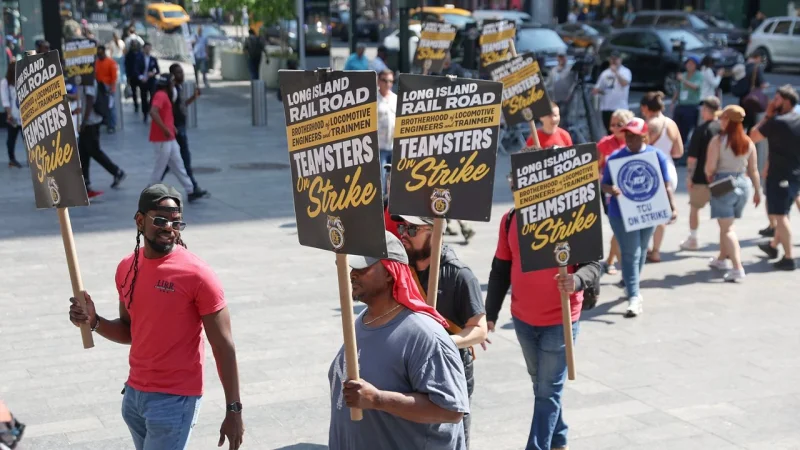
The Long Island Rail Road strike is now in its fourth day, with no deal in sight as of Tuesday morning, May 19. LIRR service remains fully suspended across the entire system, stranding nearly 300,000 daily commuters and triggering one of the most significant transit crises the New York region has seen in over three decades. Negotiations between the MTA and five striking unions are ongoing, but progress has been painfully slow.
LIRR Strike 2026: How It Started and Where Things Stand
Long Island Rail Road workers went on strike as of 12:01 a.m. Saturday after not reaching a new contract deal with the MTA. The strike represents the first work stoppage on the Long Island Railroad since 1994.
Negotiations are once again underway between the Metropolitan Transportation Authority and a coalition of five striking Long Island Rail Road unions. On Saturday, talks ground to a halt, shutting down North America's largest commuter rail system. By Sunday, the National Mediation Board stepped in, summoning management and workers to a meeting in Manhattan.
The five unions represent about half the LIRR workforce, including engineers, signalmen, and trainmen. The unions and the MTA have been negotiating for months on a new contract, with talks stalled over workers' salaries and healthcare premiums.
What Are the LIRR Unions Demanding?
The union has demanded a total raise of 16% over four years, saying it is needed to help workers keep up with inflation and rising living costs. The MTA argued that the union's initial demands would lead to fare increases. The MTA has agreed to a pay raise of at least 9.5% over the next three years, plus what would effectively amount to a 4.5% raise in year four.
Union officials defended wage demands that would average less than 3.5% annually over a proposed four-year contract, arguing the raises were reasonable and not excessive.
A representative for an LIRR union called it "laughable" that the MTA claimed unions were stalling negotiations. "We told them from day one, 'do not put us in this situation' and you know what they did, they ignored us, so here we are," one union leader said.
MTA Says Talks Stalled Again Monday
MTA Chief Negotiator Gary Dellaverson said Monday afternoon that contract talks with five Long Island Rail Road unions had stalled after negotiators failed to make progress overnight and throughout the morning. Dellaverson said the MTA believed late Sunday night that a tentative agreement to end the strike and restore Long Island Railroad service was close. Negotiators met until about 1:30 a.m., with the MTA presenting several revised proposals. Union leaders asked for more time to review the offers and requested a break until Monday morning.

Union leaders said they were hopeful a deal could be reached but said there were no guarantees. Negotiators said they believed an agreement was close several times, only for additional issues and counterproposals to emerge.
Governor Hochul and the Political Fallout
New York Governor Kathy Hochul urged the LIRR unions to return to the bargaining table during a press conference on Sunday morning. "Just three days of a strike would erase every dollar of additional salary that workers would receive under a new contract. We don't need to be here. Workers deserve better, but also New Yorkers deserve better. That's why today I'm urging all parties once again to bargain at the table and to get a deal done," she said.
Nassau County Executive Bruce Blakeman, who is running for governor as a Republican, quickly blamed Governor Hochul for the LIRR strike, intensifying the political pressure surrounding the work stoppage as the 2026 election cycle heats up.
MTA Shuttle Bus Plan and Alternative Routes for Commuters
The governor said that starting at 4:00 a.m. on Monday, the MTA would deploy shuttle buses to subway stations in Queens for essential workers. The parking lot at Citi Field is open and available for commuters to park and take the 7 train into Manhattan.
The MTA has also stated it intends to issue prorated refunds to May monthly ticket holders for any business day that service is suspended due to the LIRR strike, pending board approval.
The LIRR strike is forcing the roughly 250,000 people who ride the system each weekday to find alternative routes into New York City from Long Island's suburbs or to work from home — meaning significantly more cars on already traffic-choked highways and dramatically longer commutes across the region.
Who Does the LIRR Strike Affect?
The Long Island Rail Road strike is stranding 3,500 union workers and 300,000 daily commuters, making this one of the most disruptive labor actions in the New York metro area in recent memory.
Students have been hit especially hard. The LIRR strike is complicating finals week travel plans for college students across Long Island, with schools urging students to make alternative arrangements during one of the most critical academic weeks of the year.
LIRR service remains fully suspended as of Tuesday morning, May 19. Commuters should check the MTA website for the latest service updates, shuttle bus routes, and information on ticket refunds as negotiations between the MTA and the five striking unions continue in Manhattan.
