


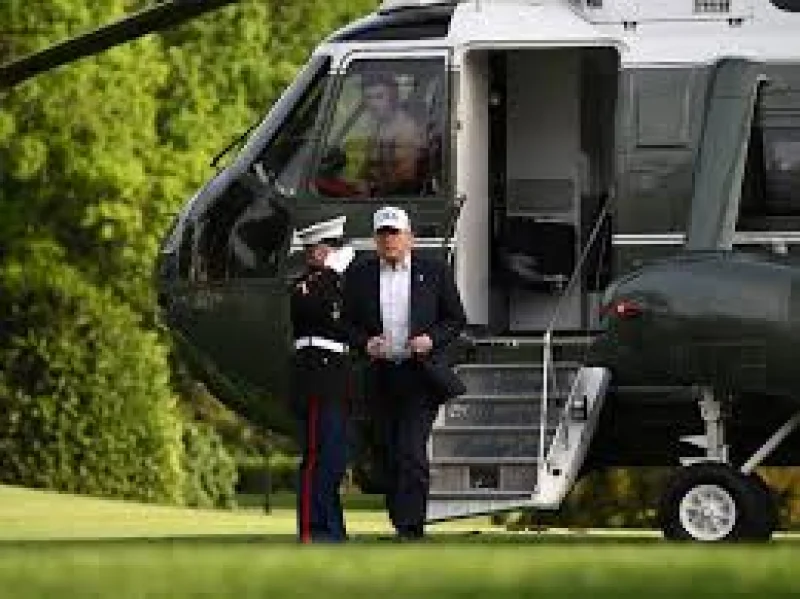
Donald Trump is planning to build a permanent helipad at the White House, possibly as early as this summer, in a move aimed at ending a recurring problem: helicopters damaging the grass beneath them. The boarding ritual now happens from the South Lawn, where Marine One has repeatedly chewed up the turf.
The plan would give the presidential fleet a hard surface instead of relying on the lawn, where the VH-92A Patriot helicopters have been barred from regular White House use because their downward exhaust heat harms the grass. The aircraft remains in support of Trump's travel elsewhere, but the White House landing operation has kept running into the same problem every time it uses the lawn.

The helipad idea is not new. It has been discussed for years as the White House tried to square presidential helicopter travel with the condition of the grounds, and Sikorsky and Lockheed Martin have been trying to find a solution to the grass damage issue tied to the VH-92A. The latest push, though, comes from Trump himself, who has made clear he wants the grounds and the building brought up to his standards.
Before he moved in, Trump reportedly called the White House "sh*t." He also said, "I would have said it was a s— house, but I don’t want to say that," and described problems that included plaster and columns falling. In his telling, the work since then has changed the place completely: "It [is] tippy-top now, including all of the brand new beautiful stone, I paid for it myself, all of the stone, all of the different things we have."
That makes the helipad plan more than a convenience project. It is another attempt to remake the White House in a way that solves a practical problem and fits Trump's taste for visible changes. But the friction point is the same one that has dogged previous efforts: the South Lawn is still the landing zone, and the helicopters still damage it. A permanent pad would settle that question by moving the operation off the grass for good.
