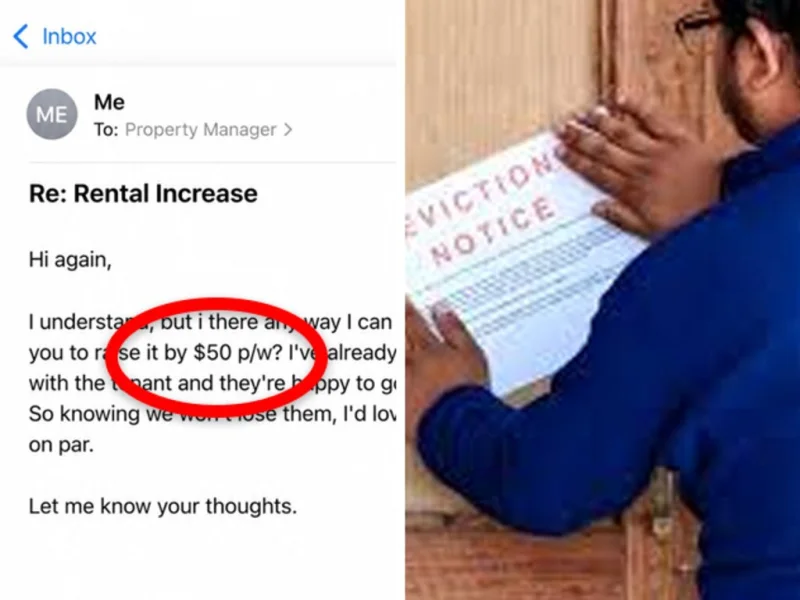
A Queensland landlord says a local property manager raised the rent on an investment property by $50 a week after being told not to, then lost the tenant before the increase took effect. The landlord now says they are facing the cost of finding a replacement tenant after the lease was ended.
The landlord said the dispute began when the property manager emailed to ask whether it was OK to lift the rent by $50 per week. They said no, calling the increase too much, and told the manager the tenants were great, looked after the place and were not people they wanted to lose. The reply, they said, was that the manager had already raised it with the tenants, who had happily accepted.
That is where the arrangement appears to have broken down. The landlord said the rent rise went ahead without permission and that, before it was due to take effect, they received notice the tenants were ending the lease. What had been a modest rent adjustment now leaves the owner looking for a new tenant and paying for advertising and marketing to fill the vacancy.
Queensland has seen plenty of friction between landlords, tenants and property managers as rental prices climb, but this case turns on something more basic than market pressure: who had the authority to make the call. The landlord says they made their position clear in writing, yet the increase was still communicated to the tenants as if it had been approved.
Legal expert Alison Barrett, from Maurice Blackburn, said the property manager may have stepped outside the authority she was given. She said the manager could have caused the landlord a financial loss and that the landlord had expressly told her in writing not to raise the rent, but she went ahead anyway. Barrett described it as a textbook example of an agent exceeding their actual authority.
“Your property manager acts on your behalf, but only within the limits you set,” Barrett said. “A property manager who raises the rent after being told explicitly not to has almost certainly stepped outside the authority she was given, breached her duty to you as her client, and it sounds like she has potentially caused you a financial loss.” She added that even if the management agreement allowed some room to act, the written instruction not to lift the rent should have controlled the decision.
For the landlord, the immediate problem is not only the disputed $50 hike but the cost of the empty property that followed it. For Barrett, the issue is simpler still: if the facts are as described, the property manager did not just make a poor judgment call, she acted beyond what she was allowed to do.