


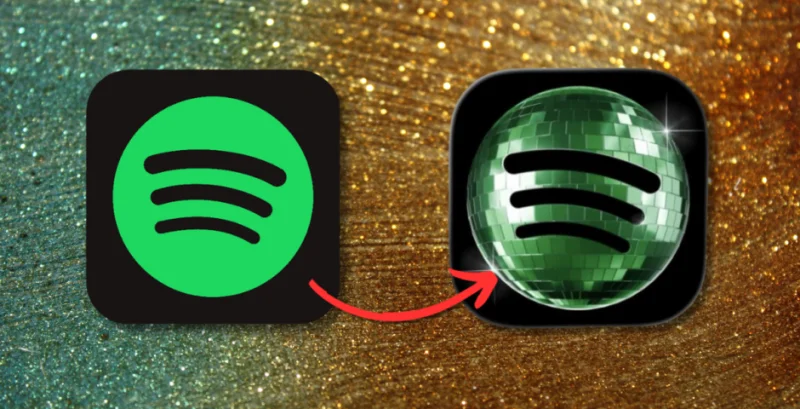
Spotify’s temporary disco ball app icon has surprised users and triggered a wave of criticism, even as the company frames the change as part of a wider 20th anniversary campaign built around listening history, nostalgia and personalized music data. The green-and-black icon, which reworks the familiar Spotify logo into a glossy party-style design, is not understood to be a permanent brand replacement.
Why Spotify Is A Disco Ball
The disco ball design is tied to Spotify 20, a campaign marking two decades of the music streaming platform. Instead of a full corporate rebrand, the icon functions as a short-term visual marker for the anniversary push.
The idea is simple: a disco ball signals celebration, music culture, parties and shared listening. Spotify is using that imagery to connect its milestone year with the way people remember songs, artists and eras of their lives. The campaign’s broader theme, “Your Party of the Year(s),” turns each user’s listening history into a personalized retrospective.
That explains why some users woke up to a changed app icon without expecting it. The company has made the disco ball look visible at the device level, meaning the change is not confined to an in-app banner or promotion. For many listeners, that made the update feel more abrupt than a typical campaign graphic.
Spotify 20 Turns Listening History Into A Feature
The logo change arrived alongside a new Spotify 20 experience that works like an expanded, long-range version of Spotify Wrapped. Rather than focusing only on the past year, the feature looks across a user’s full time on the platform.
The experience highlights details such as when a person joined Spotify, the first song they streamed, their most-played artist and the total number of unique tracks they have heard. It also creates an All-Time Top Songs playlist with 120 tracks, ranked by the user’s own listening activity.
That playlist is one reason searches for “Spotify top songs” have increased around the logo rollout. The campaign is less about changing Spotify’s identity and more about turning personal streaming data into shareable entertainment. The app icon is the most visible sign of that larger anniversary package.
Why Users Are Criticizing The New Spotify Logo
The reaction has been sharply divided, but the loudest responses have been negative. Many users have mocked the disco ball icon as cheap-looking, overly busy or out of step with Spotify’s usually clean design language. Others have compared it to older digital graphics styles, arguing that it feels less polished than the standard green logo.
The backlash also reflects how personal app icons have become. A major service changing its home-screen appearance can feel intrusive, especially when users did not choose the theme. Even temporary design changes can attract strong reactions when they alter a familiar symbol people tap every day.
Still, not all responses have been hostile. Some users see the disco ball as playful, nostalgic and suitable for a birthday campaign. The debate shows the risk of taking a simple, recognizable logo and adding a novelty layer: it may support the campaign message, but it can also weaken instant brand recognition.
Is Spotify Changing Its Logo Permanently?
There is no clear sign that Spotify is permanently abandoning its classic logo. The current disco ball version appears to be a campaign icon rather than a lasting brand overhaul.
That distinction matters. A permanent rebrand would usually involve broader changes across product pages, corporate materials, advertising, artist tools and public-facing design systems. This rollout is more closely tied to the anniversary experience and the platform’s temporary celebration.
Spotify has adjusted its logo over the years, but the core green icon with black curved lines has remained one of the most recognizable marks in digital music. The disco ball keeps the curved lines but places them over a shinier, more dimensional background. It is a remix of the existing identity, not a clean break from it.
How To Find Spotify Top Songs In The Anniversary Campaign
Users looking for their all-time listening data can search for “Spotify 20” inside the mobile app. The experience is designed mainly for mobile viewing and social sharing, with personalized cards and playlists built around each account’s history.
The main draws are the first streamed song and the All-Time Top Songs playlist. Unlike the annual Wrapped feature, which captures a single year, Spotify 20 turns years of listening into one retrospective snapshot. For longtime users, that can mean revisiting songs from different stages of school, work, relationships, travel and everyday routines.
That is why the campaign has gained attention even beyond the logo debate. The icon may be divisive, but the data experience gives users a reason to open the app and compare musical histories.
The Bigger Branding Risk For Spotify
The disco ball controversy is a reminder that even temporary design changes can become news when they affect a platform used by hundreds of millions of people. Spotify wanted its 20th anniversary to feel like a celebration centered on listeners. The reaction shows how quickly a celebratory campaign can become a design argument.
For now, the safest reading is that the new Spotify logo is a short-term anniversary treatment, not a permanent replacement. The stronger long-term story may be the Spotify 20 feature itself: a new way for the company to turn listening data into a social event, while testing how much visual experimentation users will accept from one of the world’s most familiar app icons.
