


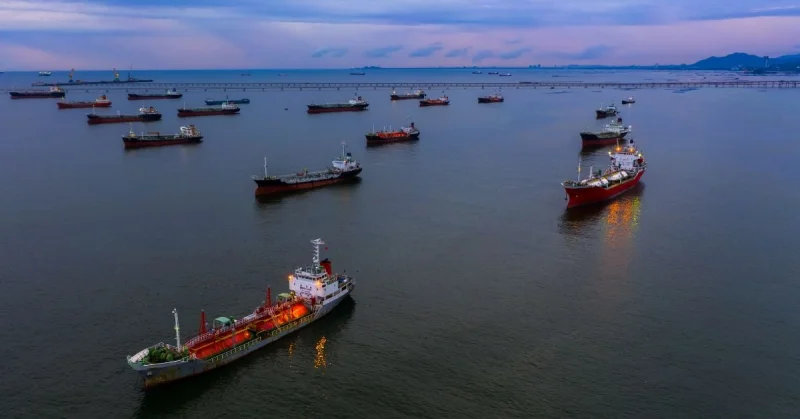
Iran said Friday it was coordinating with Oman over the future management of the Strait of Hormuz, a move that could put new fees on commercial shipping through one of the world’s most important oil chokepoints. The plan, outlined by Foreign Minister Abbas Araghchi, comes as the strait has been blocked for 10 weeks after the US-Israeli attack on Iran in February.
Araghchi described the waterway as an exclusively Omani-Iranian passage and said, “The strait is located in the territorial waters of Iran and Oman,” adding, “There is no international waters in between.” That argument goes to the heart of a dispute that matters now because the strait normally carries a fifth of the world’s seaborne oil traffic, and any new charge or restriction could ripple quickly through global markets.
Iran’s plan is not just about administration. Tehran wants a system that would impose fees on commercial shipping and require details on the nationality of all ships crossing the waterway, while Western diplomats say the wider proposal would give Iran an arbitrary right to decide which vessels are allowed through. The US has repeatedly said there can be no permanent solution to the blockade that involves paying Iran a toll.
Oman has so far said nothing publicly about the Iranian plans, even as British officials, including the Foreign Office’s political director, Lord Llewellyn, and the secretary general of the International Maritime Organization, Arsenio Dominguez, have recently been in Muscat. That silence matters because Oman is the other coastal state on the strait and has long been the channel through which competing maritime ideas are tested before they become formal policy.
The legal fight is as important as the political one. Iran became a signatory to the UN convention on the law of the sea in 1982, but it never ratified the treaty. Western diplomats say its permanent-management proposals are unlawful and would amount to tolls on commercial shipping, while a requirement that every ship open a rial account to pay for services would likely run into UN sanctions that bar money from being sent to the Islamic Revolutionary Guard Corps.
A rival plan based on freedom of navigation is being prepared by France and the UK, with backing from most Gulf states. That leaves Iran trying to turn control of a chokepoint into a revenue stream at the same time it is being challenged by governments that say the waterway cannot be priced like a private lane.
Tehran has already taken a formal step in that direction. It established the Persian Gulf Strait Authority on 5 May, and officials hope it will become a profitable revenue-generating stream. What happens next will be decided less by rhetoric than by whether Oman engages, whether the shipping industry accepts any new conditions, and whether the competing legal plans can stop a confrontation that has already kept the strait closed for 10 weeks.
