


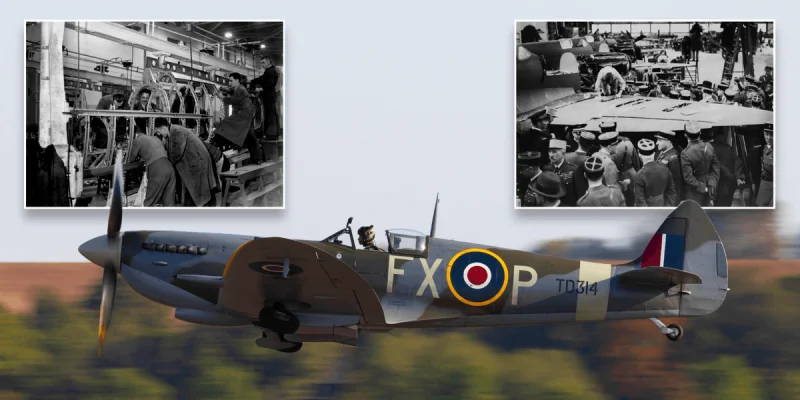
A Supermarine Spitfire could go back into production 90 years after its first flight, after a team of designers and engineers unveiled a full-scale concept model in Bodmin, Cornwall. The Aerolite Spitfire Type 433 is a modern composite reinterpretation of the wartime fighter, built for about £750,000 and now set to tour the UK.
The project takes aim at a machine that has long sat outside the reach of most buyers. An original Spitfire costs more than £3 million, while the new concept is being pitched as a recreational aircraft for pilots and enthusiasts who want authenticity with real capability. The model will travel this spring and summer to up to 10 air shows and military and classic motor festivals.
What gives the project its edge is that it is not starting from scratch. The team revisited wartime government plans that were meant to replace diminishing supplies of aluminium for Spitfire fuselages with a composite material called Gordon Aerolite. Those plans were abandoned in 1940, but modern composites have now been used to build what could be the world’s biggest kit form aircraft.
Jeremy Meeson said the timing is right to reimagine the Spitfire because today’s materials, propulsion and digital engineering now make it possible to evolve an icon without stripping out what made it exceptional. He said the design stays true to its 1940s lineage, with lightweight performance, balance and pilot connection, while adding advanced composites, modern power systems and intelligent avionics. He also said the aircraft follows in the original’s footsteps by pushing the limits of its era.
The project is not only about style. The composite construction means the aircraft would be weather resistant, removing the need for hangar storage, and it is intended to supplement the ranks of the very rare original two-seater Spitfire. There are only about a dozen of those still operational, a scarcity that helps explain why a modern substitute has become part of the pitch.
Great British Supermarine Ltd is considering investors for the project, which turns the revival from a design exercise into a possible production plan. Whether the concept becomes a flying aircraft or remains a showpiece will depend on whether the new interest around the Spitfire translates into backing strong enough to carry it past the exhibition circuit and into build reality.
