


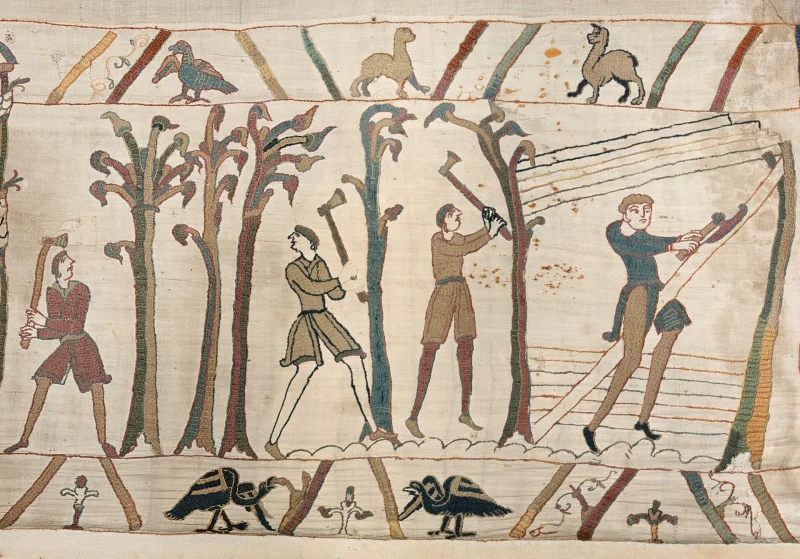
The Bayeux Tapestry will go on display at the British Museum in September, crossing the English Channel for the first time in nearly a thousand years under an £800 million government indemnity. The loan is part of an exchange that will also send the Sutton Hoo helmet and Lewis Chessmen to France, and it has already drawn a fierce backlash from campaigners who say the 950-year-old embroidery is too fragile to travel.
More than 76,000 people signed a petition calling the loan a heritage crime. Conservators warned that transport could cause tears, material loss and irreversible damage, but the decision to proceed was made by heads of state, not conservators. The tapestry has been requested by Britain before and refused twice on conservation grounds, including for Queen Elizabeth II’s coronation in 1953.
The new loan lands at a moment when museums and governments are under pressure to rethink who gets to see historic objects and where. Germany has signed over more than 1,100 Benin Bronzes, the Netherlands returned 119 Benin Bronzes in June 2025, and London’s Horniman Museum became the first UK government-funded institution to return its collection. The Bayeux decision now sits inside the same argument over preservation, access and ownership that has also surrounded the Parthenon Marbles.

That debate has intensified because conservation assessments focus on the risk of physical harm and do not weigh educational, diplomatic or research benefits. Critics say that leaves too much to politics and too little to the people charged with protecting the object itself. Supporters of the loan argue that the exchange opens a rare path to shared display, while opponents see a needless gamble with one of Europe’s most famous surviving works.
The timing also matters because museums are still taking stock of what can be lost, and what can be saved, when heritage is exposed to disaster. The January 2025 Los Angeles wildfires caused what insurers called potentially one of the most impactful art losses ever in America, even as the Getty Center survived thanks to decades of investment in fire-resistant engineering. Elsewhere in Europe, the EU-funded MOXY project is developing plasma-generated atomic oxygen to remove fire-born soot from heritage objects without mechanical contact, a reminder that preservation is becoming more technical even as the political fights grow louder.
For now, the answer to the question hanging over the loan is simple: the tapestry is going. After being kept at home for nearly a millennium, it will travel to London, and the argument over whether the gain in access is worth the risk to the cloth is no longer theoretical.
