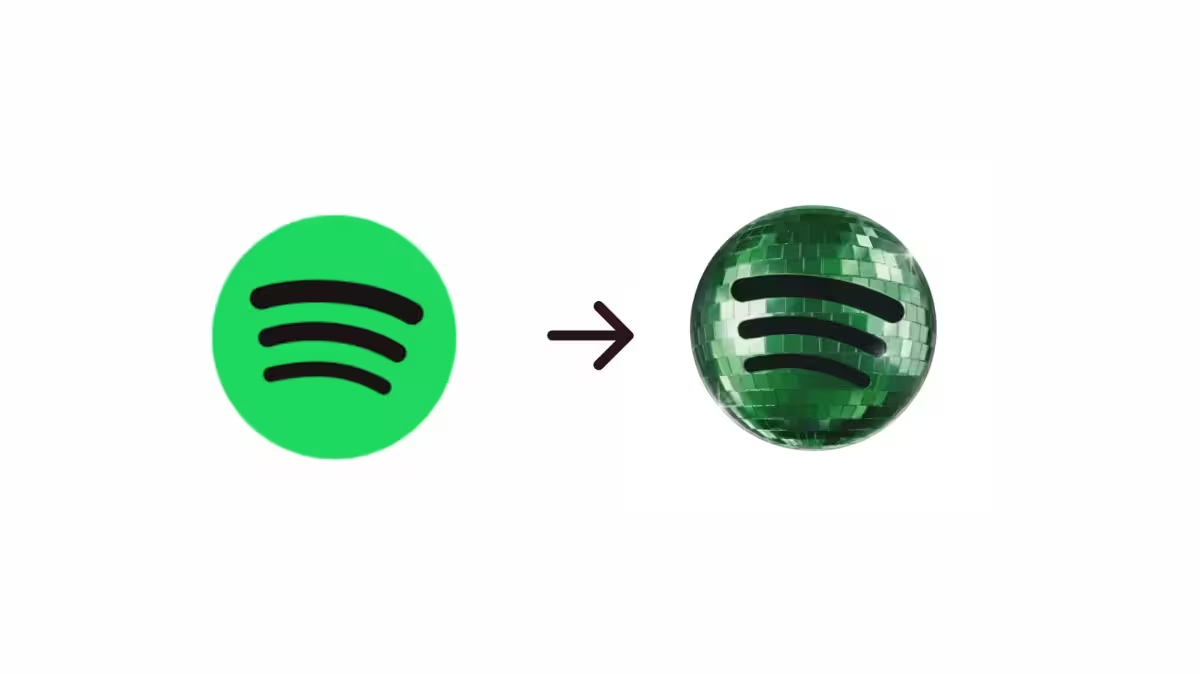
Spotify has changed its app icon for a 20th anniversary campaign, replacing its familiar flat green mark with a glossy disco-ball design that has quickly divided users. The update, now appearing for many iOS users, keeps the company’s three curved sound-wave lines but places them inside a brighter, textured green sphere meant to evoke music, nightlife and celebration.
A Birthday Icon Becomes A Design Flashpoint
The new Spotify logo is not a full corporate rebrand in the traditional sense. The company’s standard wordmark and brand assets remain in place, while the changed icon appears tied to its 20th anniversary activity.
That distinction has not stopped the reaction from spreading. Users began noticing the app icon change this week, with some seeing it first in beta versions before it appeared more broadly on iPhones. The redesign gives the logo depth, shine and a disco-ball surface, a noticeable shift from the flatter symbol that has become one of the most recognizable icons on home screens.
The backlash has focused less on the idea of a temporary celebration and more on the execution. Critics have called the icon cluttered, overly shiny and visually out of step with the clean design language used by many major apps. Supporters have described it as playful and fitting for a music platform marking two decades in business.
Why Spotify Changed The Icon
Spotify has been marking its 20th anniversary throughout 2026 with campaigns focused on music culture, artists, creators and listeners. The temporary icon fits that broader theme: a celebratory visual rather than a permanent replacement for the company’s main identity.
The choice of a disco ball is clear enough. It signals parties, dance floors and music history while giving the brand’s standard green a more festive treatment. The three curved lines remain, preserving the part of the mark most closely associated with the app.
Spotify has also used flexible logo treatments in recent years for major cultural moments, especially around year-end listening campaigns and artist-focused promotions. Those adaptations have allowed the company to treat its icon less like a fixed corporate badge and more like a canvas for music-related themes.
Users Question Whether The Change Is Permanent
One reason the reaction has been so intense is that many users were not sure whether the new icon was temporary. A changed app icon sits in a personal space: the phone home screen. Unlike a promotional banner inside an app, it becomes part of a user’s daily interface.
Spotify has not clearly signaled a long-term permanent logo replacement through its public brand materials. Its official logo assets still show the standard green and black versions, which suggests the disco-ball icon is a campaign-specific update rather than a wholesale identity change.

Still, the lack of an obvious timeline has left some users frustrated. Many want to know when the old icon will return, while others have asked for the ability to choose between the classic and anniversary versions. The debate reflects a wider tension in app design: even small visual changes can feel intrusive when they alter something people see dozens of times a day.
The Design Shift Breaks From Flat-Tech Minimalism
The new icon also stands out because it moves against the flat, minimal style that has dominated tech branding for more than a decade. Instead of a simple graphic on a clean background, the anniversary mark uses gradients, sparkle and a 3D-like surface.
That makes it more expressive, but also more divisive. On some screens, the disco-ball texture may read as lively and nostalgic. On others, it can appear busy at small sizes, especially when placed among simpler app icons.
The debate shows how difficult it is for a major digital brand to experiment visually. Spotify’s logo is not just a marketing asset; it is a navigation tool. Users rely on it to identify the app quickly, and even a temporary redesign can disrupt that familiarity.
A Familiar Pattern For Major App Changes
Spotify is not the first tech platform to face criticism after changing a familiar visual identity. App icons, typefaces and interface updates often trigger immediate complaints because they are highly visible and tied to habit.
What makes this case different is the anniversary context. The change is not tied to a product overhaul, pricing update or major new feature. It is a symbolic celebration, which means users are judging it largely on taste.
That can be a difficult standard. A temporary icon can succeed as a conversation starter while still annoying part of the audience. For Spotify, the redesign has already achieved visibility, but the mixed response may affect how long the company keeps it on users’ home screens.
What Happens Next
The main question now is whether Spotify restores the classic icon quickly or keeps the disco-ball version active through a larger anniversary campaign. The company’s regular brand materials still point to continuity, not a permanent visual overhaul.
For users who dislike the change, the practical options are limited unless their device allows custom app icons or shortcuts. Most people will have to wait for Spotify to update the icon again through a future app release.
The reaction underlines a simple reality of digital branding: even a small square on a phone screen can carry enormous recognition value. Spotify’s anniversary logo may have been designed as a celebration, but the response shows how protective users can be when a familiar app suddenly looks different.