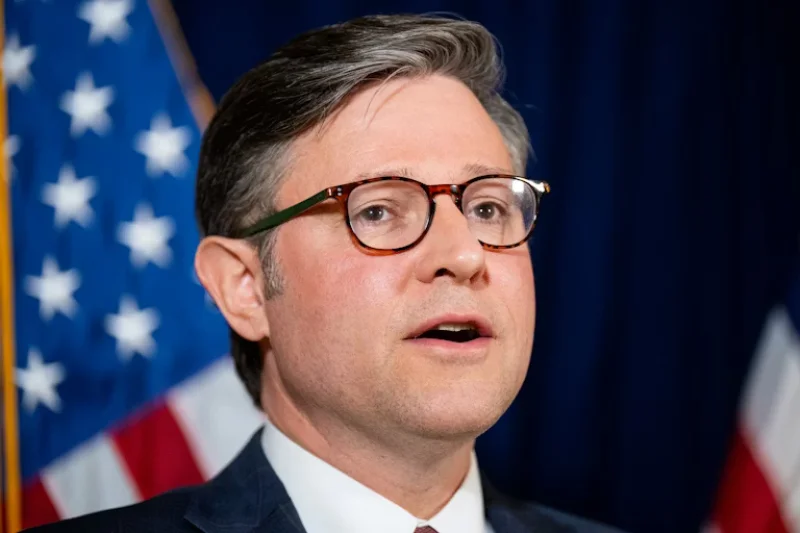
House Speaker Mike Johnson and House Minority Leader Hakeem Jeffries have launched a bipartisan effort to address sexual misconduct in Congress, giving Capitol Hill its most visible institutional response in years to renewed concerns about workplace safety, retaliation and accountability.
House Leaders Move On Workplace Misconduct
Johnson, a Louisiana Republican, and Jeffries, a New York Democrat, are backing a joint initiative led through the Republican and Democratic women’s caucuses. The effort is expected to examine how misconduct complaints are handled in the House, how staff members can report concerns, and whether existing protections are strong enough for employees who fear retaliation.
The move follows a period of heightened pressure inside Congress, where lawmakers and staff have raised concerns that formal systems remain difficult to navigate and slow to produce consequences. The initiative is not yet a finished reform package, but its bipartisan launch gives it more weight than a party-specific proposal.
The work is being steered by Representative Kat Cammack of Florida and Representative Teresa Leger Fernández of New Mexico, who lead women’s caucus efforts across the two parties. Their involvement signals that the review will focus less on messaging and more on the practical experience of staffers, aides and lawmakers who work in a closely connected political workplace.
Why Mike Johnson’s Role Matters
Johnson’s support is important because the speaker controls the House schedule, influences internal rules and determines how far leadership-backed reforms can move. Without buy-in from the speaker’s office, workplace proposals often stall before reaching a vote or a formal rules change.
The speaker has also framed the issue as personal, noting that his own daughters work on Capitol Hill. That detail has shaped the public tone of his response, placing staff safety and professional conduct at the center of the discussion rather than treating the issue only as a political liability.
For Johnson, the initiative arrives during a delicate stretch of his speakership. He is managing a narrow and often fractious Republican majority while facing disputes over government funding, immigration enforcement, Ukraine aid and internal party discipline. Taking visible action on misconduct gives him an opportunity to show institutional leadership on an issue with bipartisan urgency.
Pressure Builds After Recent Allegations
The misconduct push comes after a series of allegations and ethics concerns renewed scrutiny of Capitol Hill culture. Recent cases involving current and former lawmakers have intensified demands for clearer reporting channels and stronger protections for staff members who come forward.
The House has confronted similar issues before, especially during the #MeToo movement, when Congress faced pressure to overhaul the way harassment and misconduct claims were handled. Past reforms changed parts of the process, but critics have continued to argue that staffers can still face professional risks if they report powerful figures.

This latest effort appears aimed at the gap between formal rules and lived reality. A system can exist on paper while still feeling inaccessible to young aides, junior staff and employees whose careers depend on the political networks around them. That tension is now central to the reform debate.
Johnson Faces Other Fights In The House
The misconduct initiative is only one part of Johnson’s current workload. He is also dealing with a rare procedural challenge after House members used a discharge petition to force movement on Ukraine aid over leadership objections.
That maneuver reflects the limits of party control in a closely divided chamber. When enough lawmakers sign a discharge petition, they can bypass leadership and bring a measure toward a floor vote. In this case, the effort has put Johnson in the position of managing divisions over U.S. support for Ukraine while preserving his authority as speaker.
The issue is politically sensitive. Some Republicans remain strongly supportive of Ukraine assistance, while others are more skeptical of additional aid and prefer to align with President Donald Trump’s posture on foreign policy and spending. A forced vote would test not only Johnson’s control of the floor, but also the broader direction of House Republicans on national security.
Funding Battles Add To The Strain
Johnson is also navigating disputes tied to homeland security funding, border enforcement and Republican reconciliation plans. GOP leaders have emphasized immigration enforcement and border security as core priorities, while Democrats have criticized Republican funding strategies and policy conditions.
Another developing fight involves proposed security funding linked to President Trump’s White House ballroom project. Some Republicans have raised questions about the size and purpose of the spending, while Democrats have attacked it as an inappropriate use of taxpayer money. The issue could become another test of Johnson’s ability to keep his conference aligned.
These battles matter because the speaker’s power depends not only on holding the gavel, but on repeatedly proving that he can count votes. With a small majority, even a handful of defections can delay legislation, force concessions or hand leverage to rank-and-file members.
What Comes Next For The Speaker
The misconduct initiative gives Johnson and Jeffries a rare bipartisan opening in a House otherwise defined by partisan conflict. The next test will be whether the effort produces concrete proposals, such as clearer complaint procedures, stronger anti-retaliation rules, improved training or changes to how cases are reviewed.
For staff members and lawmakers calling for reform, the measure of success will be whether Congress creates a process that is easier to trust. For Johnson, it is also a leadership test: he must show that the House can address its own workplace culture while still managing the budget, foreign policy and political fights already crowding the agenda.
The coming weeks will determine whether the announcement becomes a durable reform push or another short-lived response to public pressure. In a chamber where internal disputes can quickly overwhelm policy work, Johnson’s challenge is turning bipartisan concern into enforceable change.